The story in brief
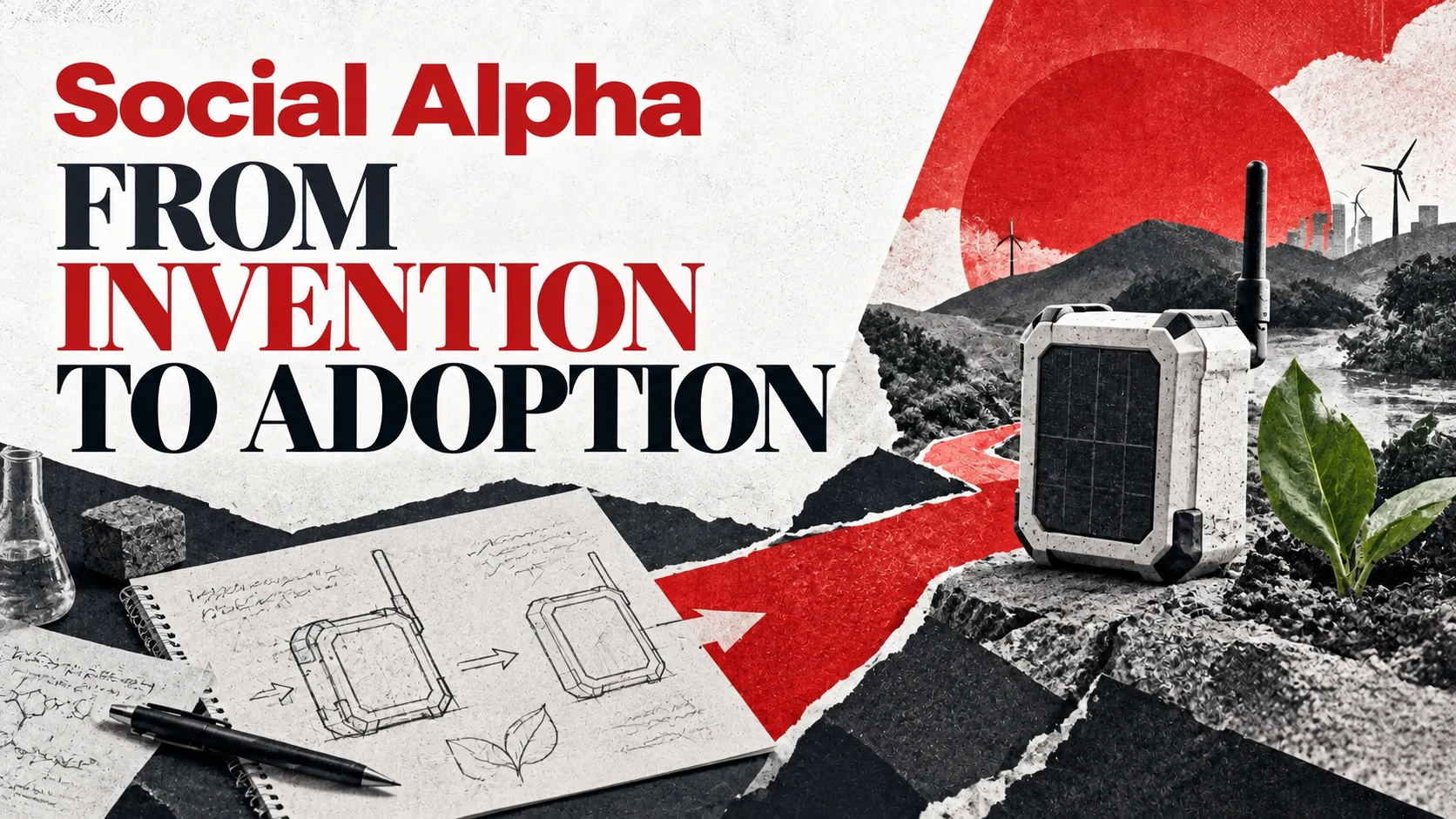
Social Alpha works around the path from science and technology to adoption. A useful pilot tests how an innovation fits the setting where its intended benefit should occur.
Social Alpha supports science- and technology-led ventures addressing social, economic and environmental problems. Its public model includes innovation labs, pilots, technical guidance, early capital and deployment partnerships. The organisation describes this as work across the journey from laboratory development to market use.
The field changes the brief
A device that works in controlled conditions may encounter different power, maintenance or training constraints in use. A pilot should expose those realities rather than merely provide a setting for a successful demonstration. Learning what prevents adoption can be as valuable as confirming that the underlying mechanism works.
Plan for the day after the pilot
Our editorial suggestion is to identify who would operate, maintain and pay for the solution if the trial succeeds. That question can reveal missing partners before the venture commits to a larger deployment. A positive pilot result does not automatically establish a sustainable delivery model. Social Alpha’s approach makes that transition visible: technical development, evidence from use and the route to adoption need to inform one another.
Design the pilot to reveal adoption problems
A pilot can demonstrate that a technology operates while leaving unanswered whether anyone can use and maintain it in practice. Identify the intended users, the surrounding workflow and the people responsible for continuing after the trial. Ask what would need to change for the solution to become part of ordinary work. Training, maintenance and coordination can matter alongside technical performance. The next iteration should respond to what the setting reveals, not only to the team’s preferred engineering roadmap. Ecosystem support is especially useful when it brings those perspectives together. A successful pilot report should explain the evidence gained and the limits of what the trial can establish.
Put the idea to work
Use these questions to investigate the idea in your own context.
- Name the adoption question the pilot will test.
- Include the people who would operate and maintain the solution.
- Record what would be required to continue after the trial ends.
A closer look
Does a successful pilot prove a technology is ready to scale?
Not by itself. A pilot provides evidence under particular conditions. Wider use may introduce different users, costs and operating constraints. The guide focuses on making the learning explicit before treating a trial as proof of broad adoption.
Sources & editorial note
This guide draws on the sources below. Our practical questions and analysis are editorial interpretation. Historical documents describe their own period; use current official programme information for availability, terms and applications.
See our editorial standards or request a correction. For another perspective, read A different kind of ambition: the Zerodha story