The story in brief
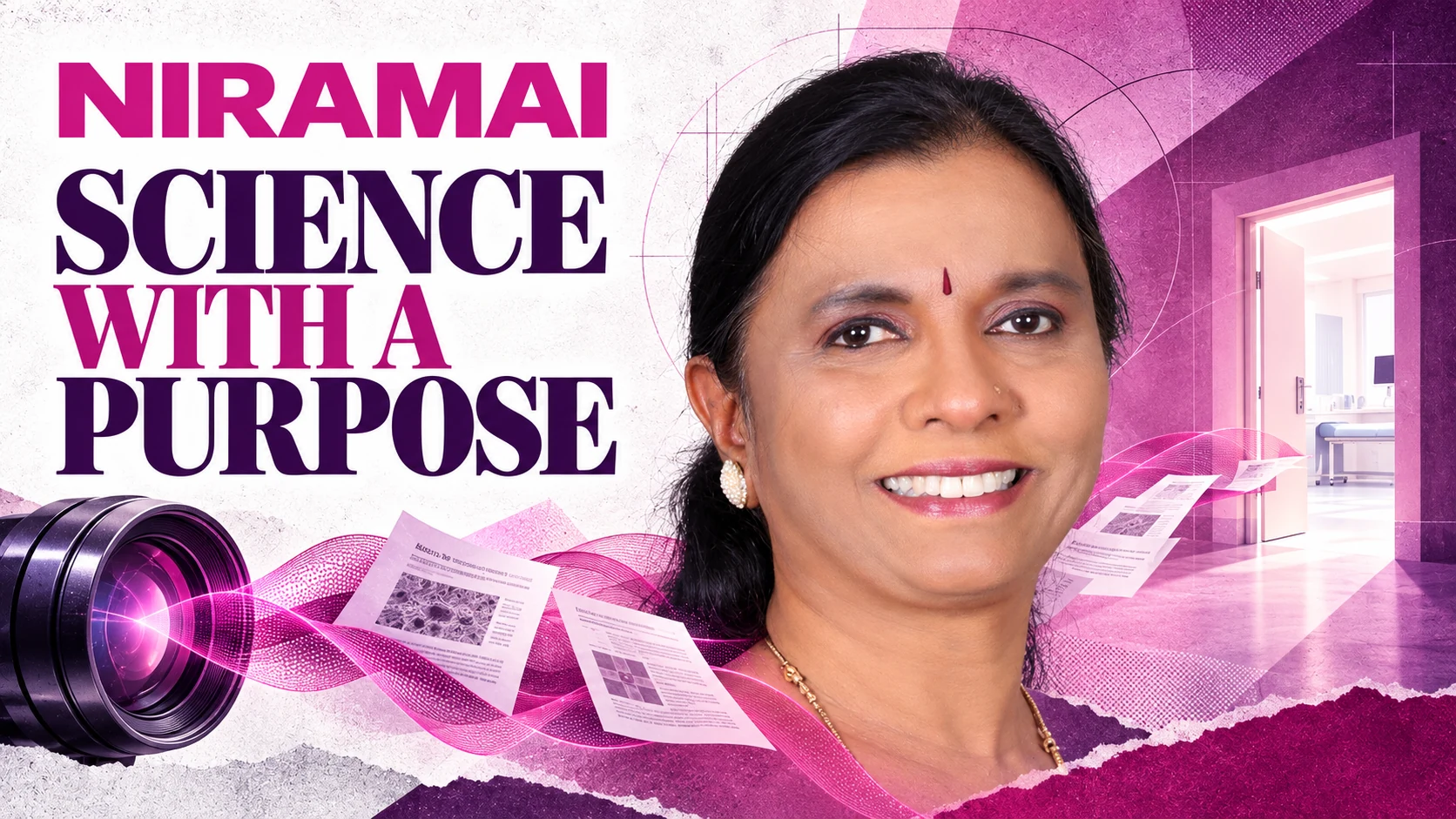
NIRAMAI’s founder story examines the move from AI research to a healthcare setting. Technical capability, evidence and the workflow around its use must be understood separately.
Geetha Manjunath brought a research career to entrepreneurship. Her NIRAMAI biography records work at Hewlett Packard Labs and leadership of AI research at Xerox, along with a doctorate from the Indian Institute of Science. The venture applies thermal imaging and artificial intelligence to breast-health screening.
A new setting changes the questions
Moving a technology into healthcare involves more than demonstrating that an algorithm can process an image. The intended use, quality of evidence, practical workflow and people interpreting results become central. A laboratory capability and an appropriate clinical service are connected through substantial work, not a single launch announcement.
The claim must match the evidence
NIRAMAI’s own materials describe its screening approach and ambitions. This profile does not independently establish diagnostic performance or recommend replacing established screening or clinical assessment. The company-building point is that scientific communication must distinguish the proposed use from the outcomes that have actually been evaluated.
The founder lens
Our interpretation of Manjunath’s journey is to identify the new disciplines a technical founder must bring into the team. The original expertise remains important, but the setting demands additional judgement. A credible venture explains both its capability and the evidence needed to use that capability responsibly.
Keep the claim close to the evidence
An AI demonstration and a service used in healthcare answer different questions. A founder’s narrative should explain what the technology is intended to do, what evidence is being discussed and which professional responsibilities surround it. Broad claims can hide differences between a laboratory result and use in a particular setting. For an editorial reader, the useful approach is to follow the chain from a technical idea to the people interpreting and acting on its output. That reveals where collaboration, evaluation and communication are necessary. The founder’s research background helps explain the venture’s starting capabilities; it does not by itself establish the performance of every application.
Put the idea to work
Use these questions to investigate the idea in your own context.
- State the intended use before describing a technical result.
- Separate a research milestone from a claim about real-world outcomes.
- Identify the people and processes surrounding the technology’s use.
A closer look
What changes when an AI idea moves into a healthcare setting?
The team must consider the intended use, the evidence relevant to it, the surrounding workflow and the people interpreting results. NIRAMAI’s founder story makes those development questions visible; a technical demonstration alone does not answer every question about use in practice.
Sources & editorial note
This profile draws on the public sources below. Company and founder accounts describe their own perspective. Our analysis, questions and takeaway are editorial interpretation. This is not an original interview or a sponsored feature.
See our editorial standards or request a correction. For another perspective, read What an incubator brings to the table.