The story in brief
SVEP places support around non-farm rural enterprises through the livelihoods framework. A useful ecosystem view includes ordinary local businesses and the practical conditions in which they operate.
The Start-up Village Entrepreneurship Programme is part of the National Rural Livelihoods Mission framework. Government descriptions explain its support for non-farm enterprises through training, finance, mentoring and community institutions. Self-help groups and community resource people form part of the support environment around these businesses.
The local market is a real market
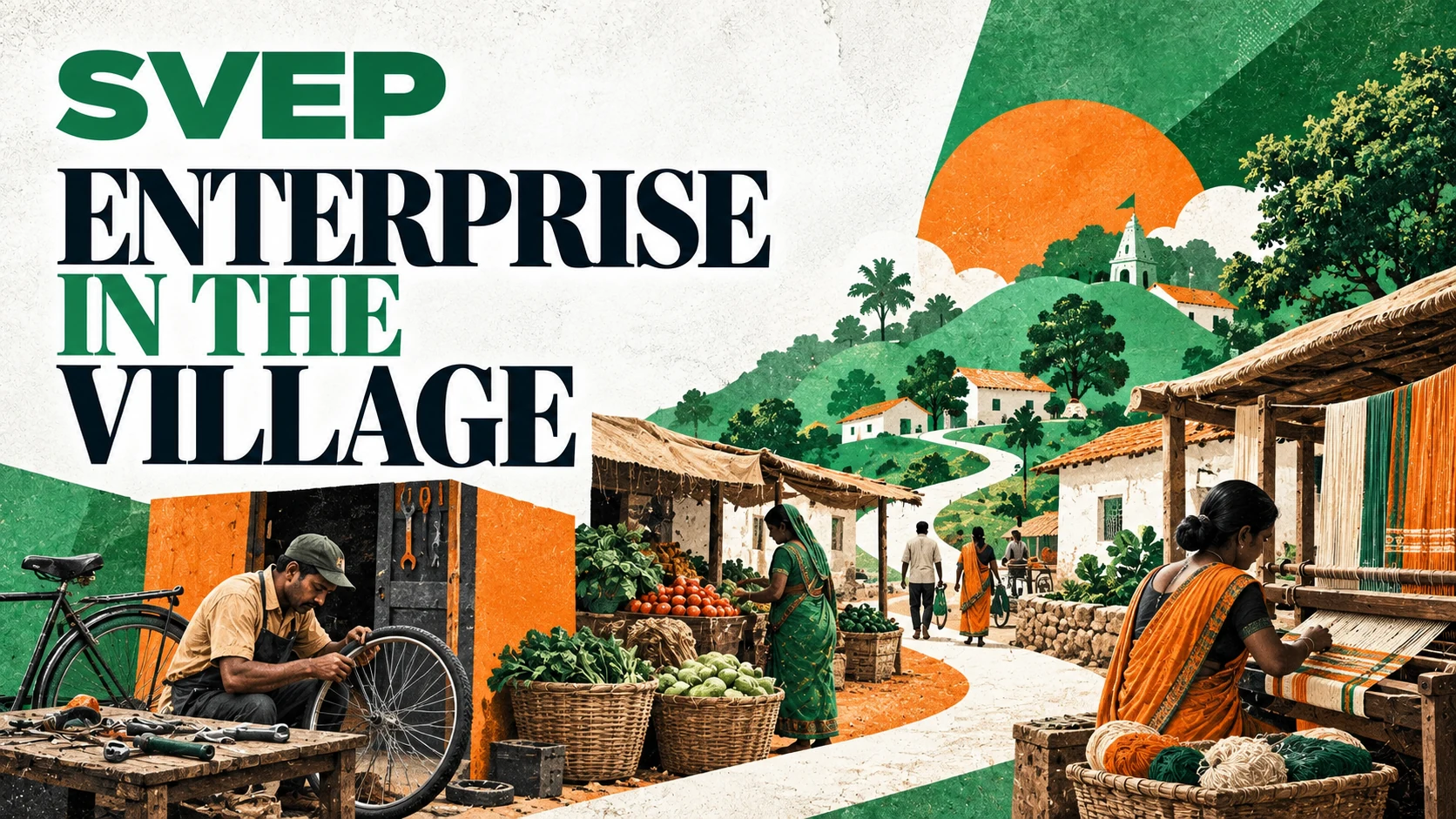
A repair service, a small shop or a processing activity can answer a recurring need without resembling a venture-capital-backed technology startup. Understanding local demand, costs and the working day can matter more than a large expansion narrative. Ecosystem coverage should make room for these forms of enterprise too.
Support the operating habits
Our editorial view is to look at the practices that help a small business continue: keeping records, understanding the customer, managing stock and separating business cash from household needs. Local mentoring can be useful because questions arise during ordinary operations, not only at launch. SVEP’s current implementation and participant requirements should be established through the relevant official channels. The wider lesson is that entrepreneurship support can be rooted in the community where the business will actually work.
Start with demand close to the business
A village enterprise may serve a recurring local need rather than seek a large external market immediately. Ask who buys, when demand changes and what alternatives customers already use. Then examine supply, skills and the support needed to run the business consistently. A useful mentor conversation can focus on everyday records, delivery and customer relationships instead of imposing a generic startup narrative. Community institutions may help connect the entrepreneur with that support, subject to the programme’s local implementation. The important story is whether the business can meet a real need in its setting and whether the founder can access help when an ordinary operating problem arises.
Put the idea to work
Use these questions to investigate the idea in your own context.
- Describe the local customer and the recurring need.
- Observe how demand and supplies vary over time.
- Confirm the programme’s local support route through the relevant official or community institution.
A closer look
Does entrepreneurship coverage need to focus only on high-growth technology startups?
No. Local services and small enterprises can be important parts of an economy. This guide includes them to show how business needs and useful support vary with the setting, rather than treating one growth model as universal.
Sources & editorial note
This guide draws on the sources below. Our practical questions and analysis are editorial interpretation. Historical documents describe their own period; use current official programme information for availability, terms and applications.
See our editorial standards or request a correction. For another perspective, read A different kind of ambition: the Zerodha story