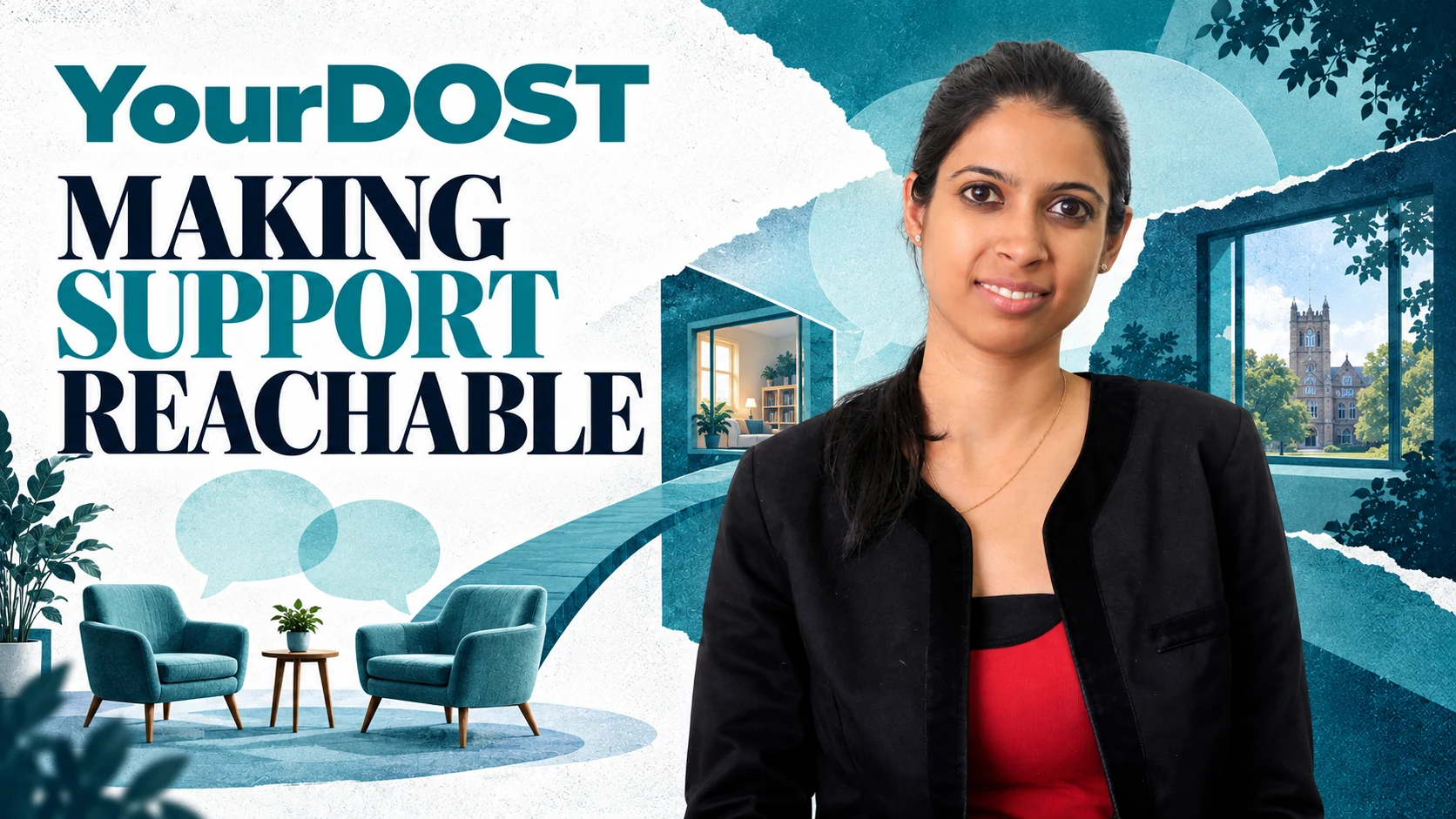
Who is Richa Singh?
Richa Singh cofounded YourDOST with Puneet Manuja. The venture addresses access to emotional-wellness support, including through educational and workplace settings. The founder story centres on a difficult adoption problem: people may need support while feeling uncertain about how, where or whether to ask for it.
- Founder profiled
- Richa Singh
- Company or institution
- YourDOST
- Reading lens
- Science & health
Source starting point: Elevation Capital: YourDOST and its founding team ↗. Full sources and context appear below.
A support service can exist while the people who need it hesitate to use it. Richa Singh and Puneet Manuja founded YourDOST around making emotional-wellness conversations more approachable. Investor Elevation Capital’s account dates the company to 2014 and describes a platform serving individuals as well as colleges and businesses.
The first conversation is a product question
Elevation’s profile highlights user anonymity and access to counselling. Those features address the experience of approaching support, rather than only the mechanics of booking a session. A person may need to understand whom they will speak with, what information is shared and how the process begins.
Access and quality must develop together
Making a service easier to reach creates responsibilities around the experience that follows. Qualifications, privacy explanations, continuity and the boundaries of the service all matter. A founder story should not turn a company’s ambitions into a claim that every user will achieve the same outcome.
The founder lens
Our interpretation of Singh’s work is to study why an available service remains unused. The obstacle may involve uncertainty or stigma as much as distance or price. Building a more approachable entry point is valuable when it connects people to an appropriate service with a clear understanding of what it can provide.
Study the hesitation before the first interaction
A service can make registration quick while leaving a prospective user unsure who will see their information or what the first conversation involves. A founder researching approachability should therefore examine the period before a session begins. Which explanations are visible? Which questions require contacting support? A respectful experience gives people understandable choices and does not equate a completed sign-up with a useful outcome. In a sensitive setting, the limits of the service should also be explained plainly. The business lesson is to build trust through the actual interaction and its boundaries, rather than relying only on reassuring language in a campaign.
The decision and its trade-offs
In a sensitive service, the person arranging access may differ from the person using it. An institution can make a service available without ensuring that individuals understand its purpose or trust its boundaries. The product and communication challenge includes explaining confidentiality, the role of professionals and how a person can seek appropriate help.
How to investigate the operating model
Map separate journeys for an institutional buyer and an individual user. Identify what each needs to know before taking the next step, without making private information part of a sales story. A responsible evaluation should distinguish awareness, access, use and outcomes. Those stages require different evidence; an increase in registrations alone cannot show that the service has helped someone.
Evidence and context
This profile does not evaluate treatment effectiveness or provide mental-health advice. Public company descriptions are insufficient to establish clinical outcomes, and personal health experiences should not be inferred from aggregate adoption figures.
Put the idea to work
Use these questions to investigate the idea in your own context.
- Map the questions a new user has before contacting the service.
- Make the audience for personal information understandable.
- Check that the first-step explanation matches the actual experience.
A closer look
What makes the first step important in YourDOST’s founder story?
A person may hesitate to approach a service even when it is available. Understanding what the interaction involves, who receives personal information and what happens next can influence that first step. The profile examines this access and communication problem through the company’s founding account.
What should a founder investigate in the YourDOST story?
Examine whether people understand the service and its privacy boundaries, whether appropriate professional support is accessible and how concerns are handled.
Sources & editorial note
This profile draws on the public sources below. Company and founder accounts describe their own perspective. Our analysis, questions and takeaway are editorial interpretation. This is not an original interview or a sponsored feature.
See our editorial standards or request a correction. For a useful comparison, read Aditi Gupta: the Menstrupedia founder story. Explore the founder topic guides for connected reading paths.