The story in brief
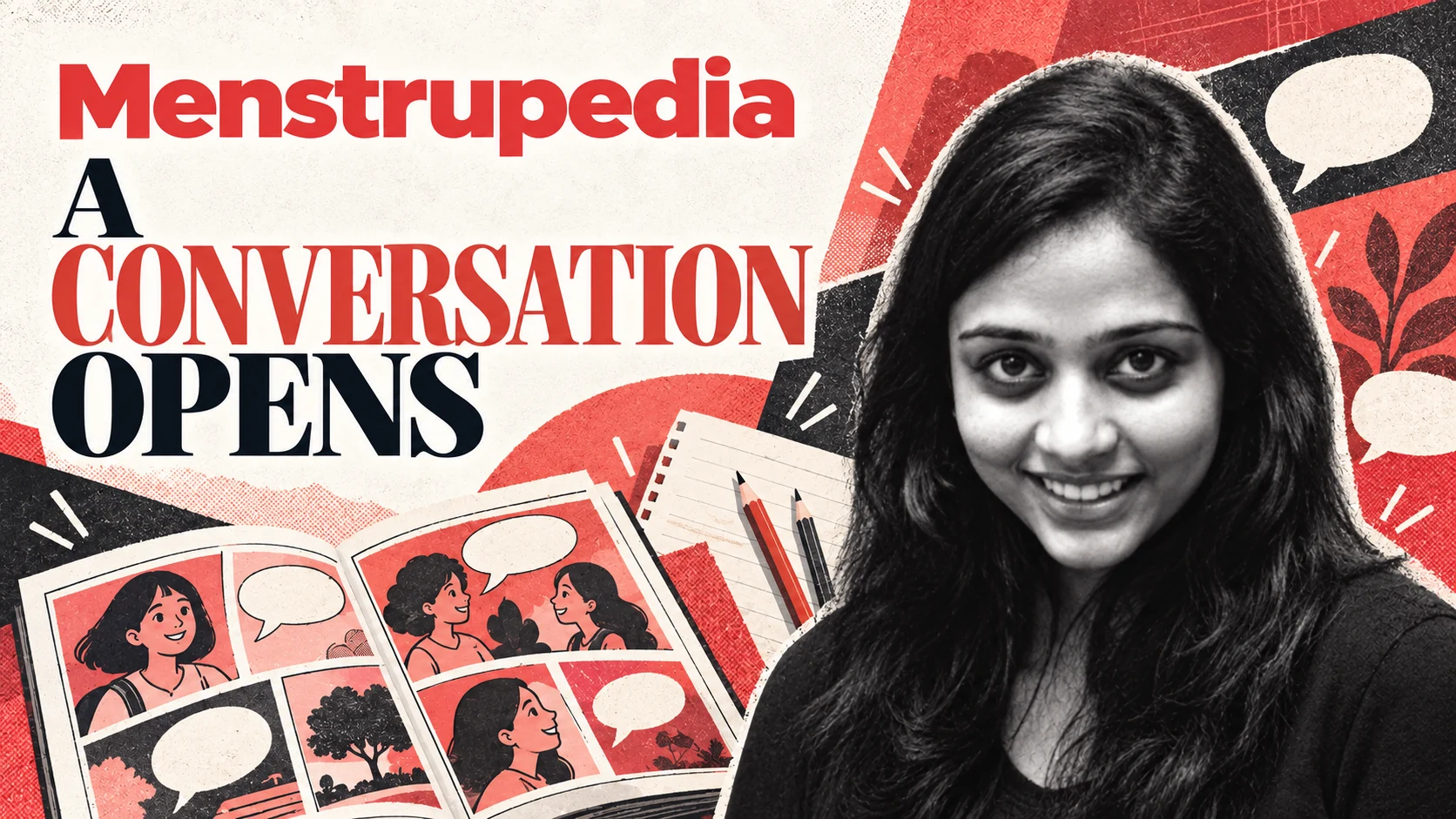
Menstrupedia uses storytelling to make menstrual education easier to approach. The founder lens is how format, language and context can help someone begin a conversation.
Some educational problems begin before a person opens a book: the subject itself can be difficult to discuss. Menstrupedia’s founding story centres on Aditi Gupta’s effort to make information about menstruation understandable and sensitive to that setting. Cofounder Tuhin Paul contributes the visual storytelling that gives the material its distinctive form.
Format changes the first encounter
Menstrupedia presents learning through illustrated stories and accessible explanatory material. The format matters because it offers a way into a conversation that may otherwise feel awkward. Characters, sequence and visual detail can help a reader follow an explanation without requiring the confidence to ask every question aloud.
A design problem with an educational purpose
Making information approachable is not the same as making it simplistic. Educational design has to consider vocabulary, age, context and who will introduce the material. A teacher, parent and independent reader may encounter the same resource differently. Those differences influence how the resource is used.
The founder lens
Our reading of Gupta’s work is to look at the barrier around information as carefully as the information itself. A venture can create value by changing how a useful explanation reaches someone. This is a profile of an educational enterprise, not a substitute for personalised medical guidance or a review of every resource it publishes.
The medium changes who can participate
Information can be accurate and still difficult to use in a real conversation. A reader may not recognise the vocabulary, feel comfortable asking a question or know how to discuss what they have read with someone else. For a founder building educational material, the practical task is to observe how the material is introduced and shared. A story can offer a starting point, but it must remain clear about what it explains. Test comprehension rather than asking only whether the design is liked. The important outcome is whether the intended audience can understand the message and take part in a more informed conversation.
Put the idea to work
Use these questions to investigate the idea in your own context.
- Identify the audience and the setting in which the material will be used.
- Ask readers to explain the main idea in their own words.
- Notice which questions the format makes easier to begin.
A closer look
Why use a comic or story for an educational subject?
A narrative can make unfamiliar language and situations easier to approach. The Menstrupedia profile examines this communication choice; it is not personal medical advice and does not replace appropriate clinical guidance.
Sources & editorial note
This profile draws on the public sources below. Company and founder accounts describe their own perspective. Our analysis, questions and takeaway are editorial interpretation. This is not an original interview or a sponsored feature.
See our editorial standards or request a correction. For another perspective, read What an incubator brings to the table.