The story in brief
NIDHI-PRAYAS supports the journey from an idea towards a prototype. The founder’s useful starting point is a testable uncertainty and the evidence a first working version should produce.
Source starting point: DST: NIDHI-PRAYAS 2.0 purpose and support model ↗. Full sources and context appear below.
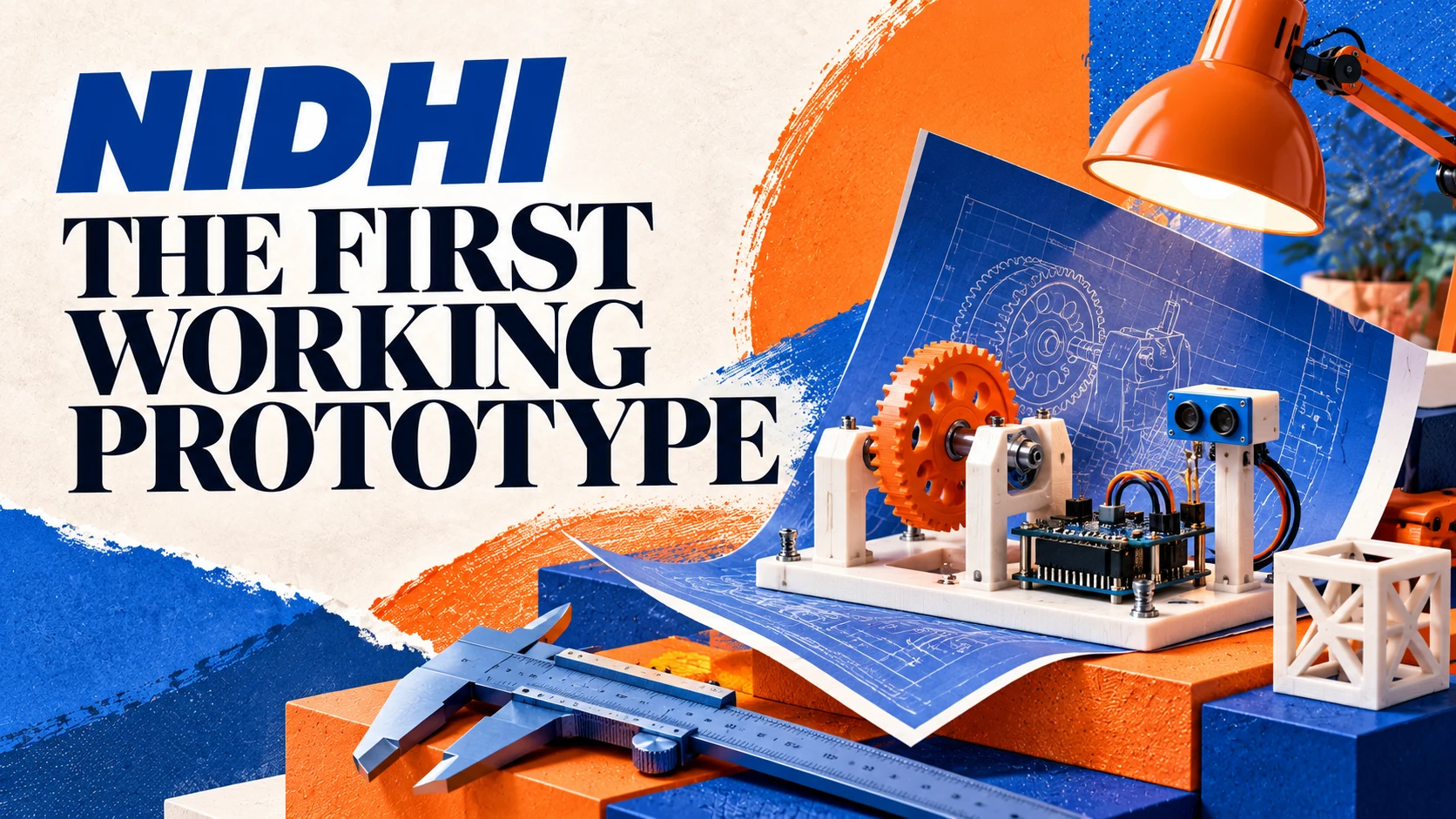
The Department of Science and Technology’s NIDHI-PRAYAS programme is designed to help innovators turn ideas into prototypes. Its PRAYAS 2.0 description combines financial support with mentoring, infrastructure and technical guidance through participating centres. The emphasis is on building, testing and refining something that can be demonstrated.
A prototype should answer a question
A polished object can be impressive while leaving the central assumption unresolved. Before making one, a team should identify what it needs to learn: whether a mechanism works, whether a user can operate it or whether the result can be repeated. Different questions may require different prototypes and different levels of finish.
Make the learning visible
Our suggestion is to document the starting assumption, the test conditions and what changed after the test. That record makes a support request more meaningful and helps the team avoid treating every iteration as a fresh beginning. Programme versions, centre offerings and calls can differ, so the current official guidance matters. This article explains the programme’s purpose and does not imply that an application is open or that a particular venture will receive support.
Build the smallest version that answers the question
A prototype does not need to demonstrate every feature imagined for the final product. It needs to answer a meaningful question. Can the mechanism work under the relevant conditions? Can a user complete the intended task? Which limitation appears first? Write that question before preparing a build plan. Connect spending and technical help to the result you need, then record what the prototype actually demonstrates. An impressive object with no clear learning purpose can consume time without improving the venture’s decisions. Programme access and support depend on the current centre and process, so use the official information to check fit before relying on a particular resource.
Write a prototype milestone that can fail clearly
‘Build a prototype’ is too broad to guide an application or a development plan. State what the prototype must demonstrate, under which conditions and with what evidence. A useful milestone can produce a clear negative result that changes the next decision. Break the budget into the activities needed to run that test, and explain which uncertainties will remain afterwards. Current programme and participating-centre requirements determine eligibility and permitted support; a technically sensible project is not automatically eligible for a particular call.
A practical next-step checklist
Use these questions to investigate the idea in your own context.
- Define the function, test conditions and pass-or-revise criteria before building.
- Connect materials, equipment and technical assistance to the planned experiment.
- Check the current call and centre requirements before relying on a funding amount or deadline.
A closer look
Is a prototype the same as a market-ready product?
No. A prototype can test a technical or user assumption while leaving production, reliability and demand unresolved. The guide helps founders frame that learning milestone; it does not promise that programme participation delivers a finished business.
Sources & editorial note
This guide draws on the sources below. Our practical questions and analysis are editorial interpretation. Historical documents describe their own period; use current official programme information for availability, terms and applications.
See our editorial standards or request a correction. For a useful comparison, read Tarun Mehta: the Ather Energy founder story. Explore the founder topic guides for connected reading paths.