The story in brief
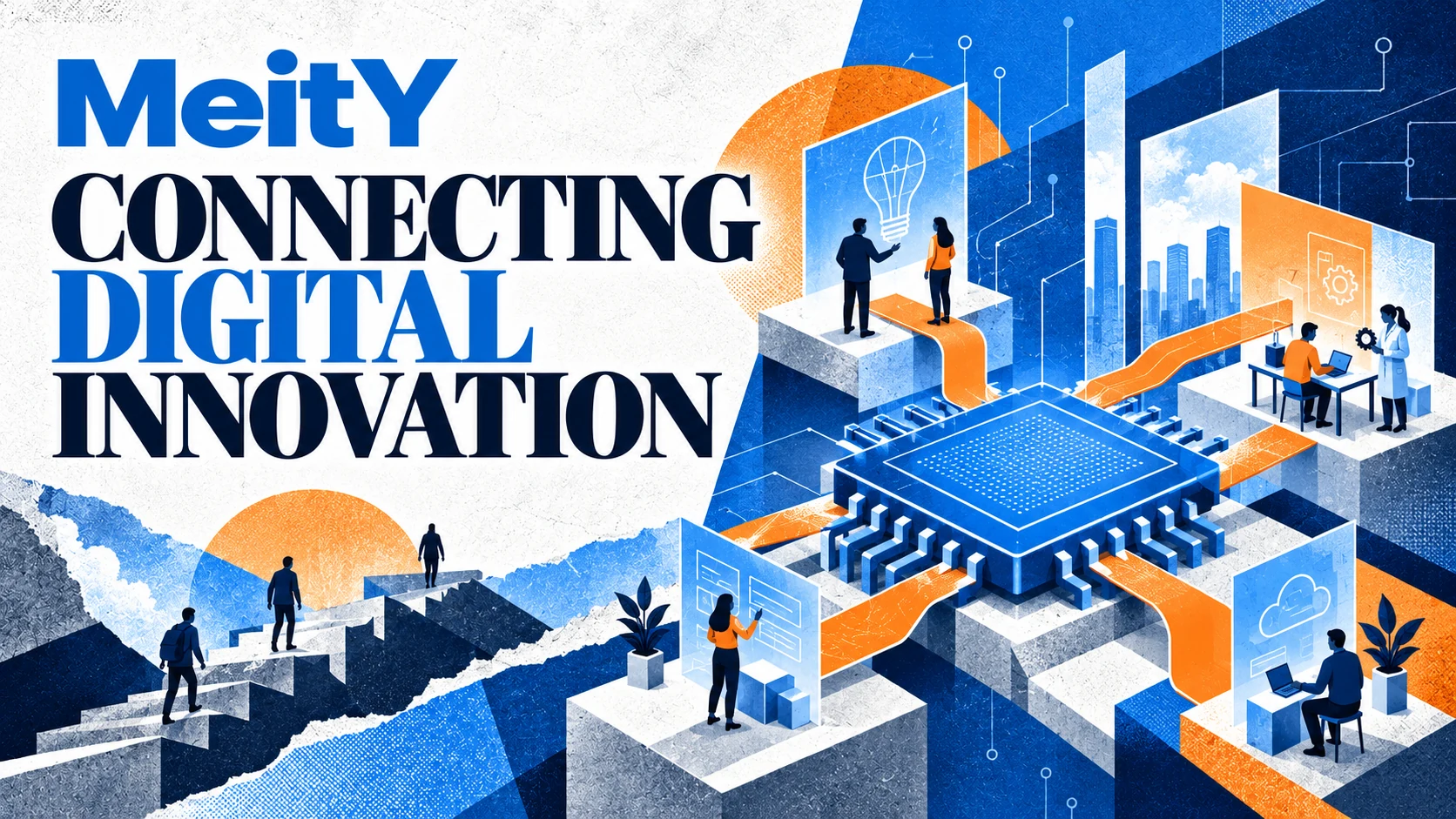
MeitY Startup Hub connects participants across digital entrepreneurship. Its platform role is useful for discovery, while individual initiatives have their own scope, conditions and selection routes.
Source starting point: MeitY / PIB: Startup Hub’s ecosystem role and GENESIS, August 2026 ↗. Full sources and context appear below.
MeitY Startup Hub serves as a platform connecting startups with incubators, accelerators, industry, investors, mentors, academia and government. A 2026 government account describes this role alongside GENESIS, an initiative with a focus on technology entrepreneurship in smaller cities. The ecosystem function is broader than any single programme announcement.
Different stages need different support
An idea-stage innovator may need time and guidance to test feasibility. A team with a prototype may need a pilot setting, while an operating company may be looking for a market connection. An umbrella platform becomes useful when these stages lead to clearly described routes instead of a confusing collection of opportunities.
Read the programme behind the headline
Our suggestion is to inspect the actual programme, its intended stage and the participating organisation. A past call provides evidence of activity, but its deadline should not be treated as current. Describe the result the venture is trying to achieve and compare it with the programme’s purpose. That is a better starting point than pursuing every announcement that mentions funding or acceleration.
Use the hub to narrow the search
A wide support network can overwhelm an early team if every announcement looks equally relevant. Begin with a short description of the technology, stage and next obstacle. Then identify which programme or partner addresses that combination. A team seeking early technical mentoring has a different request from one preparing a commercial pilot. Check the programme’s current status and application information before investing effort in a detailed proposal. Keep the distinction between the umbrella platform and the specific opportunity clear in your own records. This makes it easier to ask the right questions and prevents a broad ecosystem announcement from becoming an unsupported assumption in the venture’s plan.
Navigate the hub to a specific programme
A hub connects several kinds of organisations, while an individual programme usually has a narrower purpose. First identify whether you need incubation, technical support, an industry connection or another form of assistance. Then locate the current programme and its implementing organisation. Read the actual application material rather than treating a broad announcement as the complete rules. This is especially important when an initiative targets particular locations or venture stages: being part of the wider digital ecosystem does not establish eligibility for every associated opportunity.
A practical next-step checklist
Use these questions to investigate the idea in your own context.
- Write down the immediate support need and the venture evidence relevant to it.
- Find the current implementing partner and call for the programme you are considering.
- Confirm stage, location, documentation and timeline requirements before preparing a full application.
A closer look
Should founders apply to every programme listed by a startup hub?
A more useful approach is to shortlist by stage, sector and the support required. Applications take time, and the existence of a programme does not establish that it is open or suitable for every venture.
Sources & editorial note
This guide draws on the sources below. Our practical questions and analysis are editorial interpretation. Historical documents describe their own period; use current official programme information for availability, terms and applications.
- MeitY / PIB: Startup Hub’s ecosystem role and GENESIS, August 2026
- MeitY Startup Hub: official platform
See our editorial standards or request a correction. For a useful comparison, read Abhinav Asthana: the Postman founder story. Explore the founder topic guides for connected reading paths.