The story in brief
DigiLocker connects digital documents with participating issuers and requesting services. Founders should distinguish source-linked issued records from an arbitrary uploaded image.
Source starting point: National e-Governance Division: DigiLocker documents and consent-based sharing ↗. Full sources and context appear below.
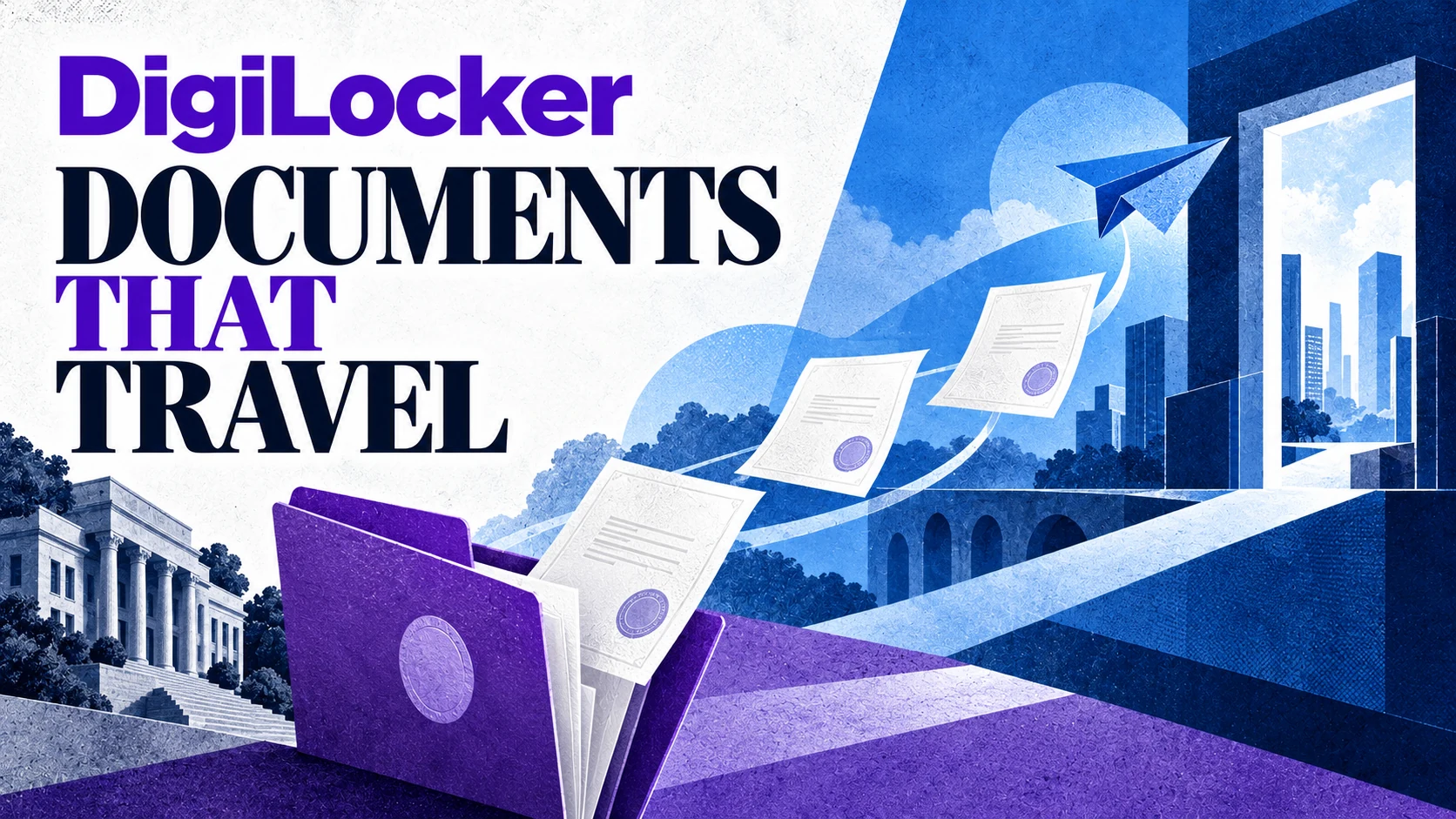
DigiLocker provides a route to access and share digital documents from participating issuers. The National e-Governance Division’s explanation emphasises verified issued records and consent-based sharing. The useful ecosystem idea is a document that can be connected to its issuing source, rather than treated only as an image uploaded to a form.
A document has a history
The organisation issuing a record and the service requesting it play different roles. A product that receives a document needs to understand what it is, where it came from and whether it serves the intended task. A self-uploaded scan and an issuer-provided record should not be described as though their provenance were identical.
Reduce repeated work thoughtfully
Our editorial question is which parts of an onboarding process can become clearer when a person can share an existing record. Ask only for information relevant to the task and explain how it will be used. An integration should help the user understand progress and recover from a missing document. Current partner requirements and document treatment belong to DigiLocker’s official guidance, rather than assumptions based on the presence of its logo.
Design the document request around the task
A service can ask for too much information simply because an old form did. Start with the task the document supports and identify which information is actually relevant. Then examine how the requester receives it and how the customer understands the exchange. A smoother retrieval process can reduce repeated uploads, but it still needs clear explanations when a record cannot be found or an issuer is not available. Test the ordinary path and the fallback with the same care. The ecosystem lesson is not only digitising a document; it is preserving useful context about its source while making the interaction understandable to the person sharing it.
Distinguish an issued record from an uploaded file
A document workflow should be clear about where a record comes from and what the receiving organisation can verify. An image of a document and a record obtained through an issuer-connected process may have different evidentiary meaning. Map the permitted integration and consent flow using current official documentation. Plan for missing records, mismatched details and a user who cannot complete the preferred path. Making a digital route available is useful, but the service still needs an understandable way to handle exceptions.
A practical next-step checklist
Use these questions to investigate the idea in your own context.
- Identify the document, issuer and verification need for the actual customer task.
- Explain the sharing step and request only the information needed for that task.
- Define a supported exception path for unavailable or inconsistent records.
A closer look
Why does the source of a digital document matter?
A connection to the issuing organisation can help a service understand where the information came from. That differs from receiving an image without the same source context. Actual acceptance and integration requirements should be checked for the relevant service.
Sources & editorial note
This guide draws on the sources below. Our practical questions and analysis are editorial interpretation. Historical documents describe their own period; use current official programme information for availability, terms and applications.
- National e-Governance Division: DigiLocker documents and consent-based sharing
- DigiLocker: requester partner information
See our editorial standards or request a correction. For a useful comparison, read Nandan Nilekani: the EkStep founder story. Explore the founder topic guides for connected reading paths.