The story in brief
ONEST proposes connections among learning, skills and livelihood services through an open network. Discoverability is useful when a learner can understand the opportunity and its next steps.
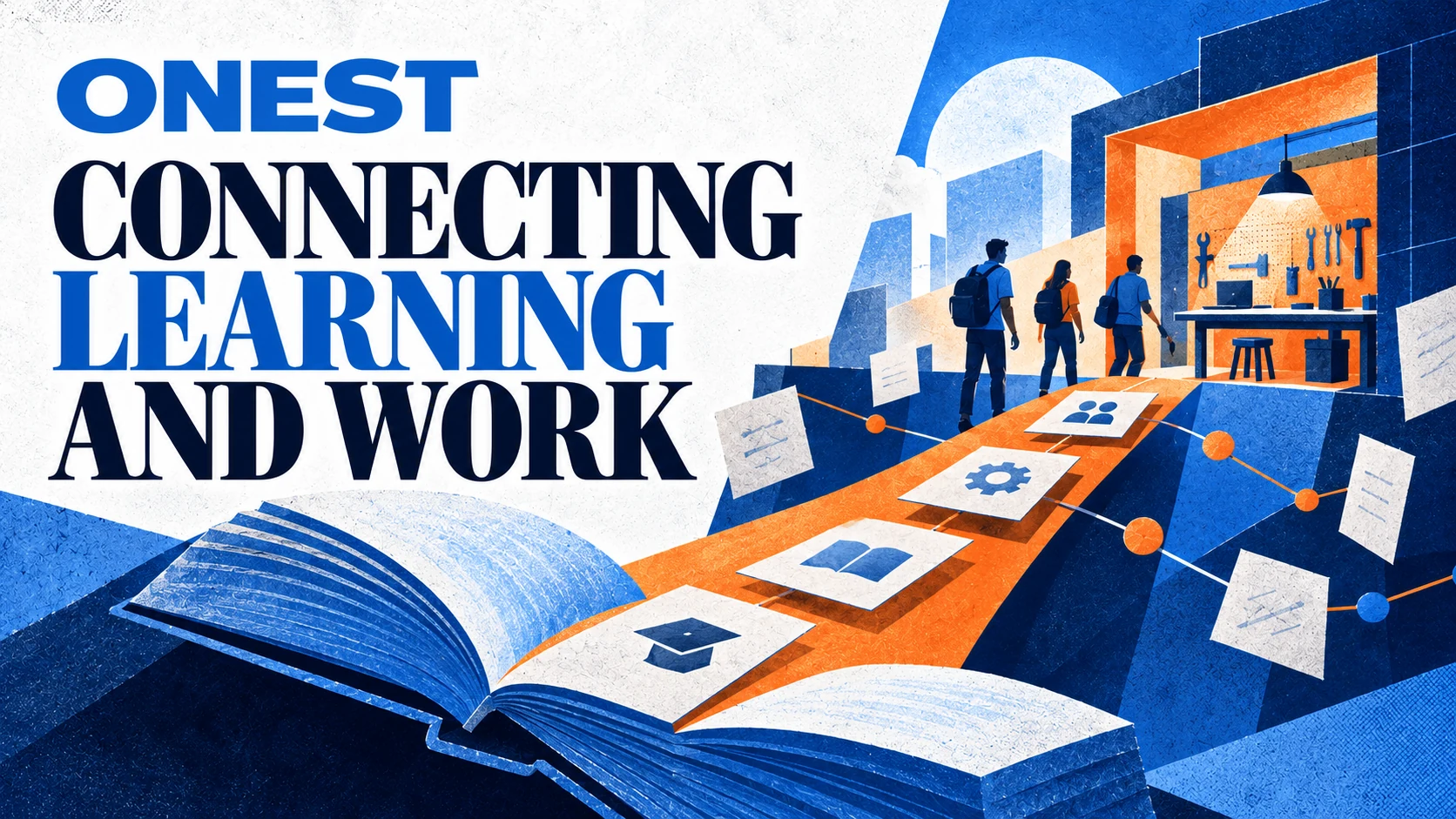
ONEST’s documentation describes an open network intended to connect participants around learning, skills and livelihood opportunities. Its model aims to make services discoverable across participating applications rather than confining every relationship to a single platform. The ambition concerns the connections between providers and the people seeking opportunities.
Discovery is only the first barrier
Finding a course or opportunity does not tell a learner whether it is suitable, credible or affordable. Descriptions, requirements and evidence of completion still matter. A network can improve the route to discovery while leaving service providers responsible for the quality and clarity of what they offer.
Follow the learner’s next decision
Our editorial suggestion is to examine the transition from seeing an option to choosing and using it. What information is missing? How does a person compare alternatives? What happens if the service does not meet the stated expectation? These questions give a startup a more concrete role to explore than the broad promise of an open network. Current technical documentation and participation arrangements determine how an actual service connects.
Follow the learner beyond the listing
A course or opportunity becoming visible does not establish whether it fits the person viewing it. A learner needs to understand prerequisites, format, cost where relevant and what participation actually involves. A provider joining a network should therefore examine the information it contributes and how enquiries are handled after discovery. Trace one learner’s path from finding an opportunity to deciding whether to participate. Missing context or an unclear handover can interrupt that path even when the technical connection works. The useful ecosystem outcome is a better route between need and opportunity, with participants clear about the part of the experience they are responsible for.
Put the idea to work
Use these questions to investigate the idea in your own context.
- Describe the intended learner and any prerequisites clearly.
- Trace the handover from discovery to the provider’s next step.
- Keep opportunity details current as availability changes.
A closer look
Does a learning network guarantee employment?
No. Discovering a course or opportunity is different from completing it or securing work. The guide examines connections and information quality, without treating network participation as proof of an individual learning or employment outcome.
Sources & editorial note
This guide draws on the sources below. Our practical questions and analysis are editorial interpretation. Historical documents describe their own period; use current official programme information for availability, terms and applications.
See our editorial standards or request a correction. For another perspective, read A different kind of ambition: the Zerodha story