The story in brief
SUGAR’s founding chapter shows how an existing beauty business can become a source of customer insight. Conversations become useful when they produce a specific, testable product brief.
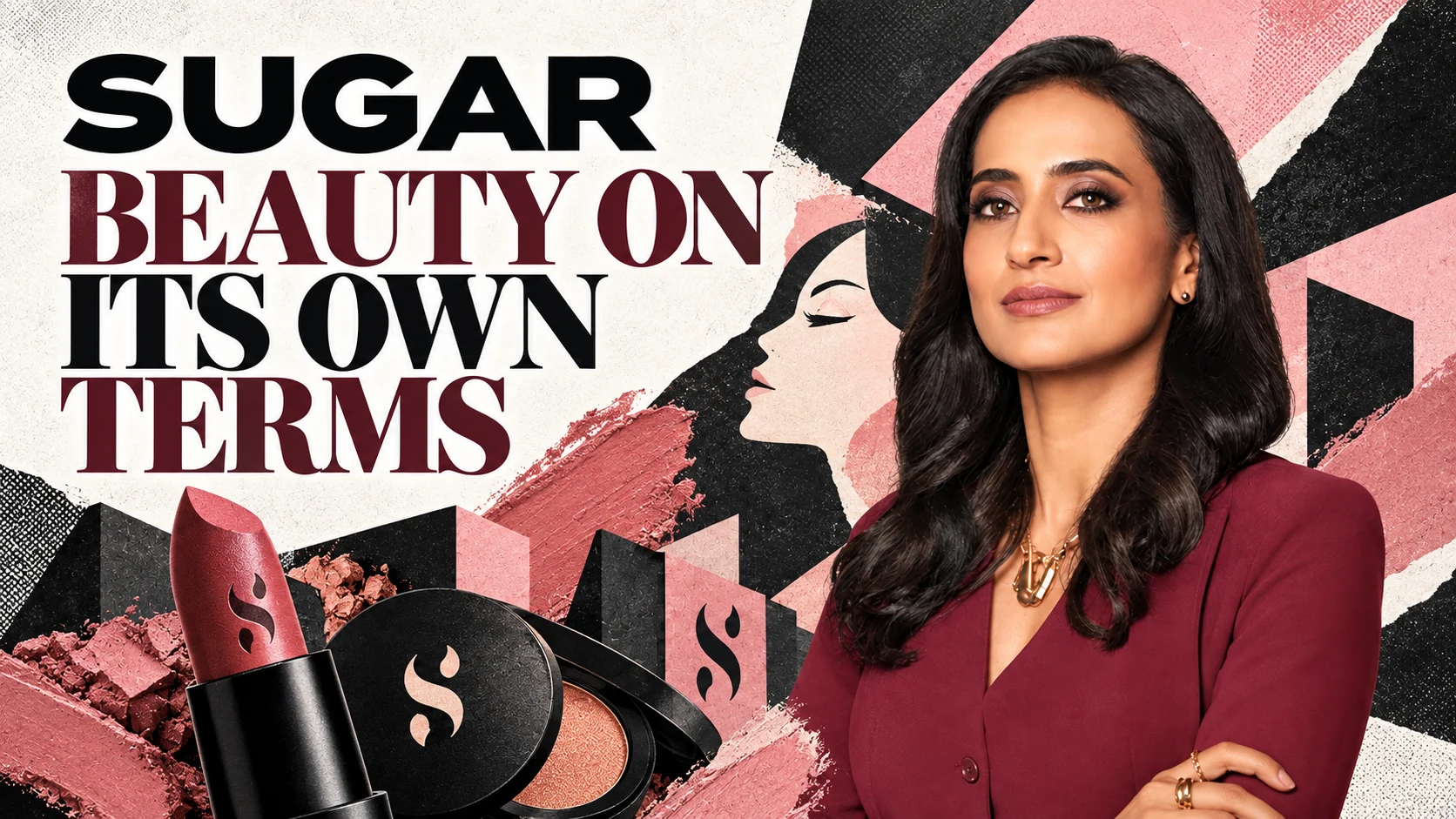
SUGAR’s beginnings were preceded by another venture. In an interview with IIM Ahmedabad’s alumni magazine, Vineeta Singh describes starting the FABBAG cosmetics subscription business with Kaushik Mukherjee in 2012. Conversations with its customers helped shape the idea for SUGAR, which launched in 2015.
The audience came before the product range
Singh’s account emphasises learning what women wanted from makeup, including preferences shaped by Indian complexions and climate. Those are the founder’s explanation of the opportunity, rather than independent proof that every product meets every customer’s needs. They show how an existing customer relationship can generate a more specific product brief.
Feedback becomes a design choice
Listening has value when it changes a decision: which shades to develop, how a product wears, how it is presented or where it can be tried. A brand must translate a broad conversation into choices it can actually manufacture, explain and support. Not every request belongs in the first range.
The founder lens
The useful lesson is that a previous venture can produce knowledge even when the next business takes a different form. Customer access becomes particularly valuable when the founder pays attention to patterns rather than isolated enthusiasm. A recognisable brand can grow from a sharply understood set of needs.
Listen for a need, not a flattering response
Customers who already like a business can provide valuable detail, but their enthusiasm should not be mistaken for the view of the entire market. Ask about the last purchase, the product left unused and the situation in which an alternative disappointed them. Those accounts are more concrete than asking whether a new idea sounds attractive. A founder moving from a subscription relationship into a product brand also takes on different decisions about development, stock and distribution. The customer insight may transfer while the operating model changes. A useful reading of this story therefore follows both the discovery of a need and the work required to serve it repeatedly.
Put the idea to work
Use these questions to investigate the idea in your own context.
- Ask customers about a recent experience rather than a hypothetical preference.
- Compare insights from enthusiastic users with people who stopped buying.
- Translate the strongest repeated need into a product requirement.
A closer look
How can an earlier venture inform a new brand?
It can provide customer relationships and a setting in which to observe unmet needs. SUGAR’s origin story illustrates that possibility, while leaving the new brand responsible for testing its own product choices and commercial assumptions.
Sources & editorial note
This profile draws on the public sources below. Company and founder accounts describe their own perspective. Our analysis, questions and takeaway are editorial interpretation. This is not an original interview or a sponsored feature.
See our editorial standards or request a correction. For another perspective, read What an incubator brings to the table.