The story in brief
Mamaearth’s origin links a personal parenting experience with consumer-brand development. The founder challenge is to test whether a household’s concern is shared and how a product promise can be supported.
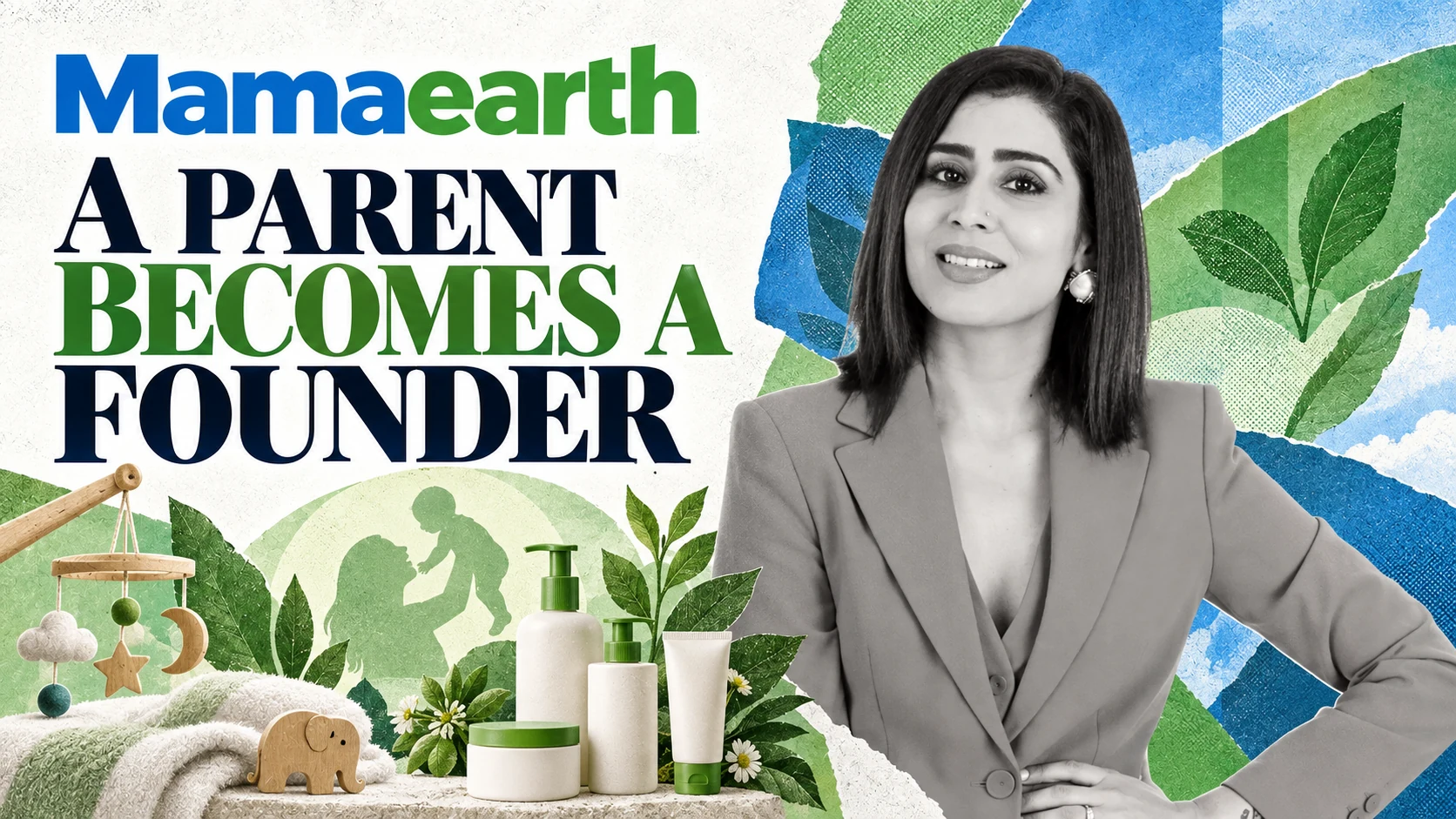
Ghazal Alagh cofounded Honasa Consumer with Varun Alagh in 2016. The company’s biography connects the beginning of Mamaearth to their experience as parents looking for care products. Ghazal’s earlier work included corporate training, alongside a background in technology and an interest in art.
Personal experience supplies the opening
A parent’s difficulty can reveal a useful starting question, but a consumer company needs to understand many households. Honasa’s account highlights Ghazal’s involvement in consumer communities and product development. The interesting transition is from a personal preference to a product proposition that can be evaluated by other people.
Trust needs concrete information
Care categories bring close attention to ingredients, suitability, packaging and instructions. Broad brand language cannot answer every customer question. Clear product information and a dependable response to feedback are part of the experience. This profile describes the company’s origins; it does not endorse a particular product’s safety or effectiveness.
The founder lens
Our reading of Alagh’s story is to treat lived experience as the beginning of research. It can make a problem vivid and motivate the work, while still leaving assumptions to test. The next task is to learn which aspects of that experience are widely shared and which belong to one family’s circumstances.
A personal problem is a starting hypothesis
Founders often understand the emotional importance of a problem before they know how widely it is shared. That familiarity can guide useful questions, but it can also make the first answer feel more universal than it is. Speak with households whose needs and budgets differ, and separate what people want from what a product can demonstrate. In a care category, broad words about safety or quality need particular care in the way they are explained. A strong brand story connects customer concerns to specific product information and a reliable response when questions arise. The interesting transition is from personal conviction to a proposition other people can examine for themselves.
Put the idea to work
Use these questions to investigate the idea in your own context.
- Record the original concern without assuming every household shares it.
- Ask customers what evidence they need to understand a product claim.
- Use feedback to distinguish a communication gap from a product gap.
A closer look
Does the founder’s personal story prove a product is suitable for everyone?
No. An origin story explains the motivation for a venture. It is not evidence of universal suitability or a medical claim. This profile examines customer understanding and brand development, not the safety or effectiveness of individual products.
Sources & editorial note
This profile draws on the public sources below. Company and founder accounts describe their own perspective. Our analysis, questions and takeaway are editorial interpretation. This is not an original interview or a sponsored feature.
See our editorial standards or request a correction. For another perspective, read What an incubator brings to the table.