Who is Upasana Taku?
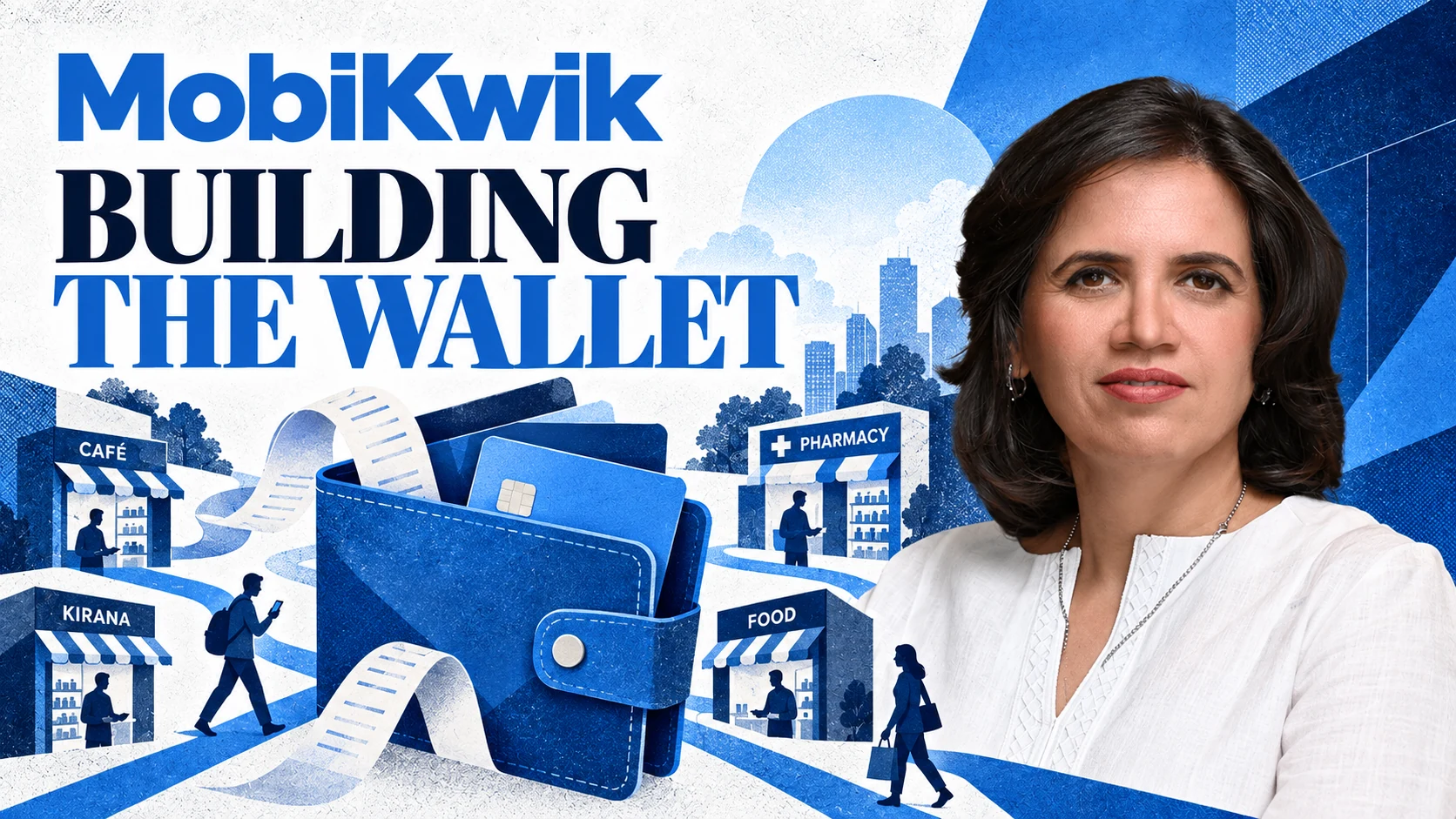
Upasana Taku is a cofounder of MobiKwik. Her biography describes earlier product work at PayPal and HSBC and a return to India in 2008, before the venture’s 2009 beginnings. The case explores how experience in payments translates into a different customer and operating environment.
- Founder profiled
- Upasana Taku
- Company or institution
- MobiKwik
- Reading lens
- Fintech
Source starting point: MobiKwik: Upasana Taku’s biography ↗. Full sources and context appear below.
Upasana Taku’s route to MobiKwik passed through product roles at PayPal and HSBC in the United States. Her company biography records her return to India in 2008 and connects MobiKwik’s beginnings to 2009. The venture placed her experience in payments and financial services inside a very different consumer market.
A familiar task, a different route
MobiKwik’s public offering includes a wallet, recharges and bill payments. These are recurring tasks, which makes reliability and clarity important to adoption. A customer needs to understand what happened to a payment and what to do when an expected confirmation does not arrive.
Product and operations meet
A payment experience includes more than the visible steps in an app. Support, transaction records and communication around unsuccessful attempts shape whether a person is comfortable returning. A founder working in this category must bring the operational experience into product decisions from the beginning.
The founder lens
Our interpretation of Taku’s journey is that prior expertise becomes useful when it is adapted to local behaviour. A familiar process in one market may feel unfamiliar in another. The task is to understand which explanations and working details help people complete an ordinary need with confidence, without assuming that a digital route is self-explanatory.
Design the explanation as carefully as the action
A payment interface must tell someone what is happening, not only offer a button. Consider the customer returning to a transaction after an interruption: can they understand the status and know whether to wait, retry or seek help? For a founder, these moments reveal requirements that a smooth demonstration misses. Study the language people use when they contact support and compare it with the labels in the product. A service can reduce uncertainty by making responsibilities and next steps concrete. That is a more durable form of familiarity than assuming users will understand the underlying payment process because they have used another app.
The decision and its trade-offs
Prior domain experience helps a founder recognise recurring infrastructure and trust problems. It can also conceal assumptions about how customers access technology, understand a transaction or seek help. A new market requires those assumptions to be tested. The important question is which knowledge transfers and which habits belong to the earlier context.
How to investigate the operating model
Observe a complete payment task, including a failed or uncertain attempt. Record the words users use to describe the problem and whether they can identify the next step. Product education, transaction records and support should reinforce one another. A service that appears straightforward to a payments specialist may still be difficult for a first-time user to understand.
Evidence and context
Financial-service features, eligibility and regulatory conditions can change. This founder profile does not determine the current availability or suitability of a wallet, credit product or other service.
Put the idea to work
Use these questions to investigate the idea in your own context.
- Review the messages shown after an interrupted action.
- Compare product labels with the terms customers use in support requests.
- Make the next step visible when a status remains uncertain.
A closer look
What can experience in payments contribute to a new venture?
It can help a founder recognise operating constraints and common points of confusion. The new product still needs its own customer research. This profile discusses that design challenge, not financial-product suitability or current regulatory permissions.
What should a founder investigate in the MobiKwik story?
Review successful task completion, understanding of transaction status and support recovery. Familiarity with a brand is not the same as understanding a financial workflow.
Sources & editorial note
This profile draws on the public sources below. Company and founder accounts describe their own perspective. Our analysis, questions and takeaway are editorial interpretation. This is not an original interview or a sponsored feature.
See our editorial standards or request a correction. For a useful comparison, read Vijay Shekhar Sharma: the Paytm founder story. Explore the founder topic guides for connected reading paths.