The story in brief
Paytm offers a case in designing for both sides of a payment. A customer wants an easy transaction; a merchant also needs clear confirmation and a usable record.
For a customer, paying can be a brief action. For a merchant, knowing that the payment arrived is part of running the business. Vijay Shekhar Sharma’s Paytm offers a founder story about these connected needs: the consumer interface and the operational confidence on the other side of the counter.
A product with two audiences
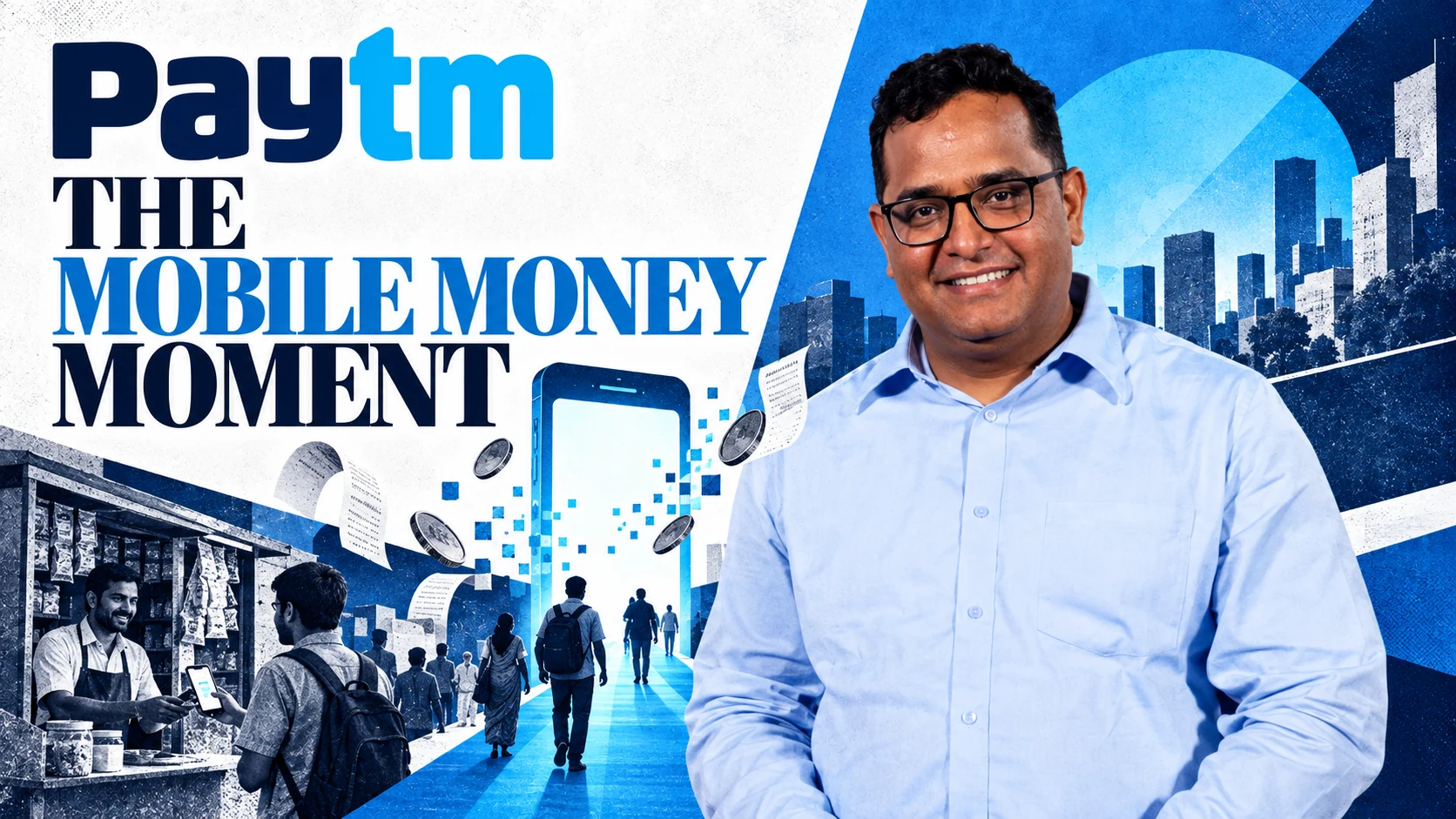
In Paytm’s 2026 shareholder letter, Sharma describes payments as the foundation of the company’s work and merchants’ daily operations as a central focus. The company’s product material also describes Soundbox devices that provide audio payment alerts. Those are specific examples of technology responding to the conditions of everyday selling.
Confirmation is an experience
The design question reaches beyond making a transfer possible. A shopkeeper may be serving several customers, checking inventory or working away from a screen. A clear confirmation can reduce uncertainty at the moment of exchange. That makes hardware, communication and service relevant to what might otherwise look like a software-only problem.
The founder lens
Our interpretation is that adoption depends on fitting into an existing routine. A payments venture has to consider what both participants need to understand, trust and resolve. Paytm’s journey is therefore useful as a product-design case, without treating the company’s shareholder statements as independent evidence of every performance claim.
Observe the counter, not only the screen
A product team can miss important requirements if it studies payments only in a quiet demonstration. At a busy counter, a merchant may be speaking to another customer or checking goods. Confirmation must fit that setting. After the interaction, someone still has to reconcile the payment with the sale and understand an exception. These are separate moments in the same workflow. For founders, the useful method is to observe what people do before and after using the product, including their workarounds. A more visible alert may help one moment; it cannot by itself answer every question about transaction status, account access or follow-up support.
Put the idea to work
Use these questions to investigate the idea in your own context.
- Observe a merchant completing several ordinary sales.
- Distinguish a payment notification from the records needed for reconciliation.
- Document the next step when either participant is unsure what happened.
A closer look
Why does payment confirmation matter to a merchant?
A merchant needs to understand what happened while continuing to serve customers. Clear confirmation addresses that immediate moment, while records and support address later questions. The Paytm profile uses these connected tasks to examine how payment products fit everyday selling.
Sources & editorial note
This profile draws on the public sources below. Company and founder accounts describe their own perspective. Our analysis, questions and takeaway are editorial interpretation. This is not an original interview or a sponsored feature.
- Paytm: Vijay Shekhar Sharma’s 2026 shareholder letter
- Paytm: Soundbox and merchant product descriptions
See our editorial standards or request a correction. For another perspective, read What an incubator brings to the table.