The story in brief
HCL’s hardware origins widen the usual software-centred account of Indian technology. Engineering, components, production and customer support all belong to the company-building story.
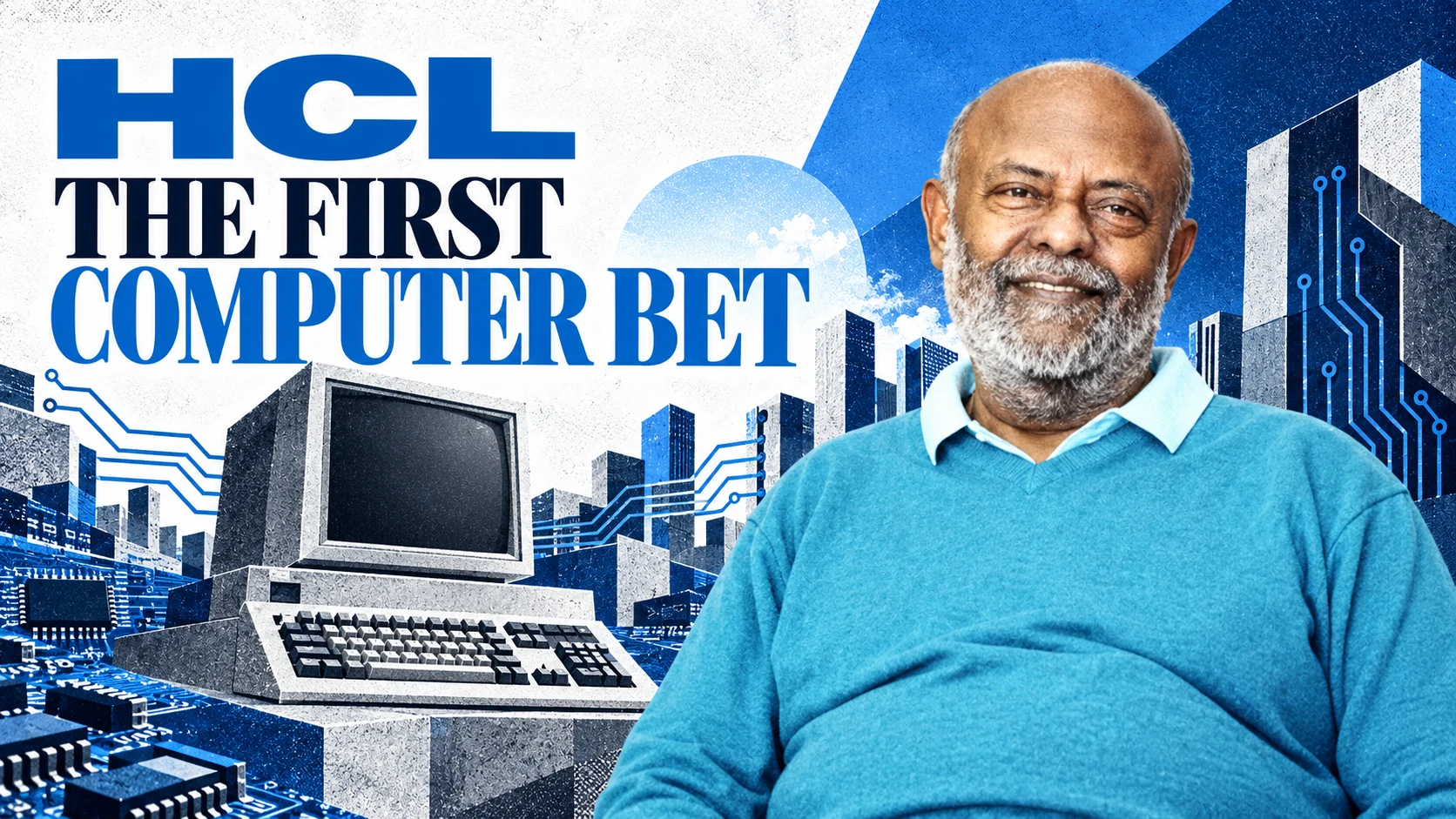
The story of Indian technology is not only a story of software services. HCL’s origins sit in computing hardware. Established in 1976, the venture associated with Shiv Nadar and its founding team developed an 8-bit microprocessor-based computer in 1978, according to the group’s own history.
Making the machine work
A hardware company has to connect engineering with components, manufacturing, testing and support. Those tasks make the venture’s environment particularly visible. A promising design still needs a practical route into the hands of someone who can use it, maintain it and rely on it.
Capability can outlast a product
HCL’s later businesses span a much broader technology landscape. The early hardware chapter remains useful because it draws attention to the skills and working systems that survive changes in products. Engineering judgement, customer understanding and the ability to organise delivery can travel into new contexts, although each new context brings its own demands.
The founder lens
Our reading of Nadar’s journey is to look beneath the category label. A company may change the things it sells while retaining an underlying way of solving problems. For a new team, identifying that capability can be more useful than defining its future entirely by its first product.
The product continues after the demonstration
A working demonstration answers whether a design can perform under the conditions shown. A customer also needs installation, repair, replacement parts and help when conditions differ. A founder studying a hardware beginning should therefore follow the product into use. What knowledge must a service team have? Which component creates the longest delay when it fails? How does feedback from the field reach the next design? These questions make the surrounding organisation part of the invention’s usefulness. They also show why an expanding product range can require deeper operational capability, not simply more engineering ideas. The story is about building a system able to support the technology it introduces.
Put the idea to work
Use these questions to investigate the idea in your own context.
- Document the difference between a demonstration and everyday use.
- List the skills required to maintain the product after delivery.
- Create a route for field problems to inform design decisions.
A closer look
Why include hardware in a history of India’s technology founders?
Hardware reveals dependencies that a software-only narrative can overlook, including components, manufacturing and maintenance. HCL’s early chapter provides a concrete setting for understanding how those capabilities develop around a founding team.
Sources & editorial note
This profile draws on the public sources below. Company and founder accounts describe their own perspective. Our analysis, questions and takeaway are editorial interpretation. This is not an original interview or a sponsored feature.
See our editorial standards or request a correction. For another perspective, read What an incubator brings to the table.