The story in brief
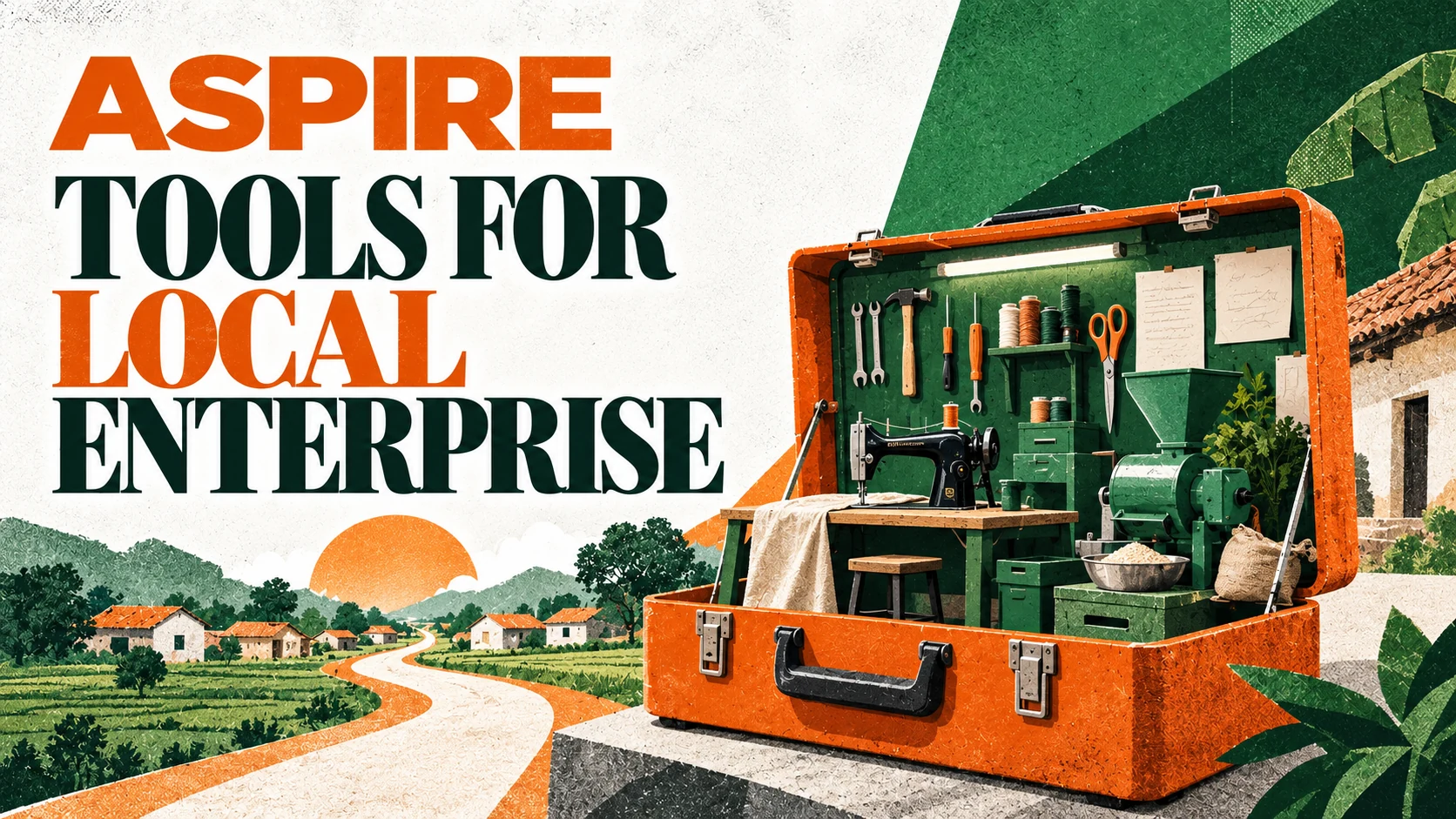
ASPIRE’s livelihood-incubation approach connects practical skills with enterprise development. Training becomes more useful when linked to demand and the work of running a business.
The Ministry of MSME’s ASPIRE scheme supports entrepreneurship and employment, with attention to rural and agro-based sectors. A 2026 government account describes Livelihood Business Incubators as a central part of the model, bringing training, mentoring and enterprise-development support together.
A skill is a beginning
Being able to make a product or provide a service does not settle how the business will reach customers, price its work or maintain supplies. An entrepreneur may need help connecting technical capability with these daily commercial tasks. Practical training becomes more useful when it reflects the market in which the person expects to operate.
Start with the surrounding economy
Our editorial suggestion is to examine local inputs, recurring demand and the services already available. A business idea should be tested against that setting rather than chosen only because a machine or training course is offered. The relevant incubator’s facilities and current programme conditions determine the available support. ASPIRE’s livelihood focus is a reminder that incubation can be about creating a workable small enterprise as well as developing a novel technology.
Follow the skill into a customer transaction
Learning to make a product is one stage in building an enterprise. The entrepreneur also needs to understand who wants it, how it will reach them and what the work requires on an ongoing basis. A useful incubation plan connects these questions rather than treating training completion as the final outcome. Ask how participants gain practical experience and what support exists for the next step. Local market conditions may shape the answer as much as the equipment used in training. Check the current programme and implementing institution for actual access arrangements. The ecosystem value lies in a workable transition from capability to activity that customers find useful.
Put the idea to work
Use these questions to investigate the idea in your own context.
- Connect the skill being learned to a specific customer need.
- Identify the supplies and operating tasks needed after training.
- Ask the implementing institution what follow-on support is currently available.
A closer look
Is completing livelihood training the same as establishing a business?
No. Training develops capability, while a business also needs demand, operations and a way to reach customers. The guide examines how incubation can connect these stages without assuming that every participant will follow the same path.
Sources & editorial note
This guide draws on the sources below. Our practical questions and analysis are editorial interpretation. Historical documents describe their own period; use current official programme information for availability, terms and applications.
See our editorial standards or request a correction. For another perspective, read A different kind of ambition: the Zerodha story