The story in brief
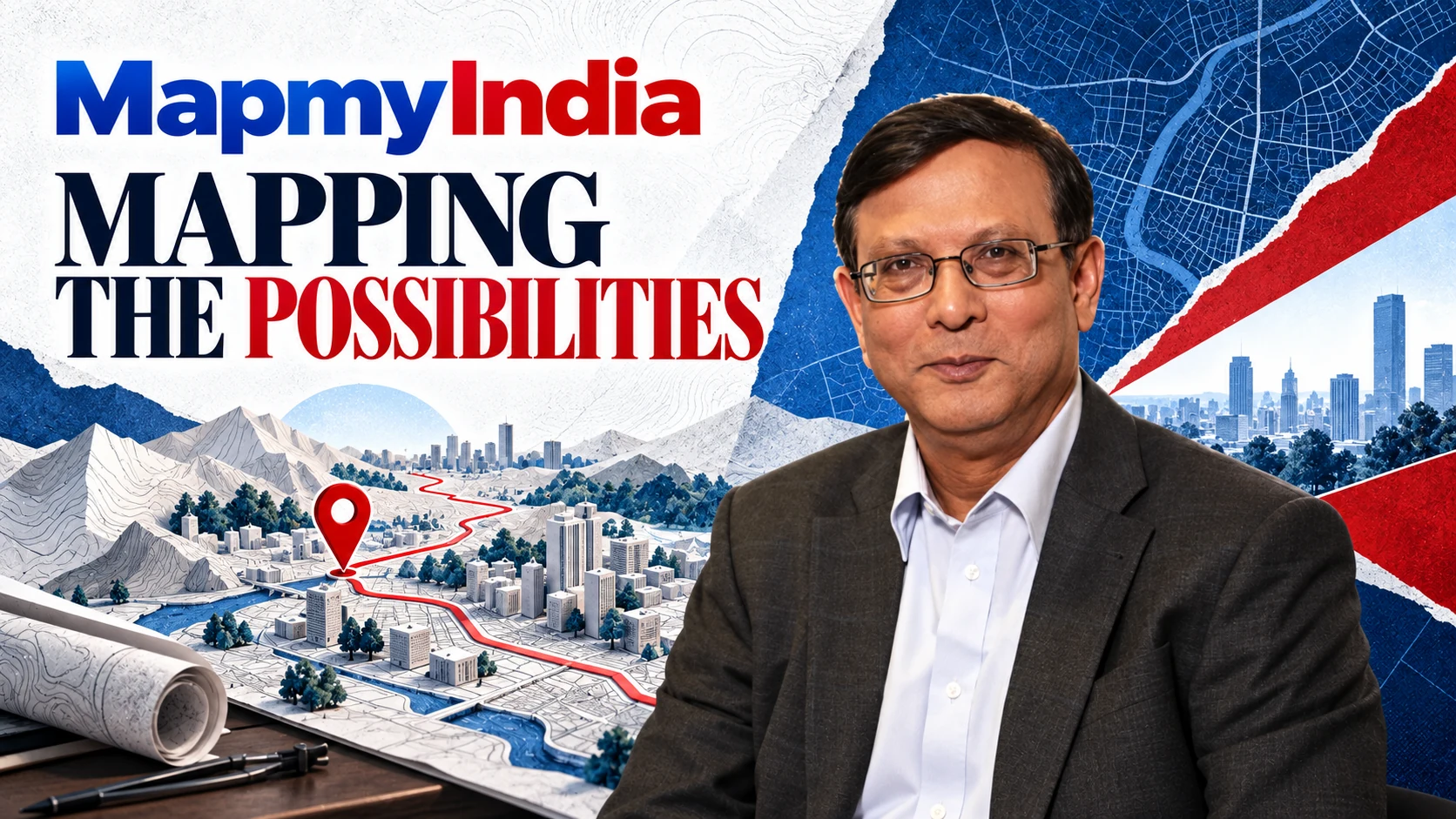
MapmyIndia’s founding story makes the information asset behind a map visible. Collecting, maintaining and organising geographic data creates work long before it appears in an interface.
A map on a screen can make a complicated information task look effortless. Rakesh Verma’s company biography tells a longer story: after working at General Motors in the United States, he returned to India and cofounded CE Info Systems with Rashmi Verma. Their work developed into MapmyIndia’s digital-mapping business.
Data has to be built
The company’s media-kit biographies describe Rakesh’s interest in geographic information systems and Rashmi’s contribution to the technical framework for digital mapping. This makes the founding team important to the story. Commercial ambition depended on building and maintaining an information resource that other products could use.
The asset changes with the world
Location information does not become permanently complete after an initial collection effort. Roads, addresses and points of interest can change. A mapping business therefore needs methods for maintenance and quality as well as ways to display the result. The visible application is only one layer of that work.
The founder lens
Our reading of the Vermas’ journey is to look for the enduring work underneath a convenient interface. A hard-to-build asset can enable many applications, but it also brings continuing responsibility. Founders working with data should ask how the information will remain useful after the first demonstration has impressed its audience.
An information product is never only a first collection
A useful map has to remain useful as the world it describes changes. This makes maintenance part of the product rather than an activity that begins after launch. A founder building a data business should ask how an error is discovered, how an update is checked and which applications depend on it. Different users may need different levels of detail or freshness, so one broad statement about coverage can hide important distinctions. The founding team’s complementary capabilities also matter: technical work and commercial understanding must inform each other. The business lesson is to treat the data’s continuing usefulness as a capability that needs people, process and feedback.
Put the idea to work
Use these questions to investigate the idea in your own context.
- Identify which data errors matter most to a user’s task.
- Define how corrections enter and move through the system.
- Match the level of detail to a specific application.
A closer look
Why call a map an information asset?
The visible map depends on organised geographic information that other products can use. The article focuses on the work of creating and maintaining that resource, rather than reviewing the current coverage or accuracy of any navigation service.
Sources & editorial note
This profile draws on the public sources below. Company and founder accounts describe their own perspective. Our analysis, questions and takeaway are editorial interpretation. This is not an original interview or a sponsored feature.
- MapmyIndia: Rakesh Verma’s founding biography
- MapmyIndia: Rashmi Verma’s technical and founding role
See our editorial standards or request a correction. For another perspective, read What an incubator brings to the table.