The story in brief
WE Hub focuses on support for women entrepreneurs across different starting points. The practical test is whether a programme helps resolve a specific barrier in the venture’s development.
Source starting point: WE Hub: purpose, participants and entrepreneur services ↗. Full sources and context appear below.
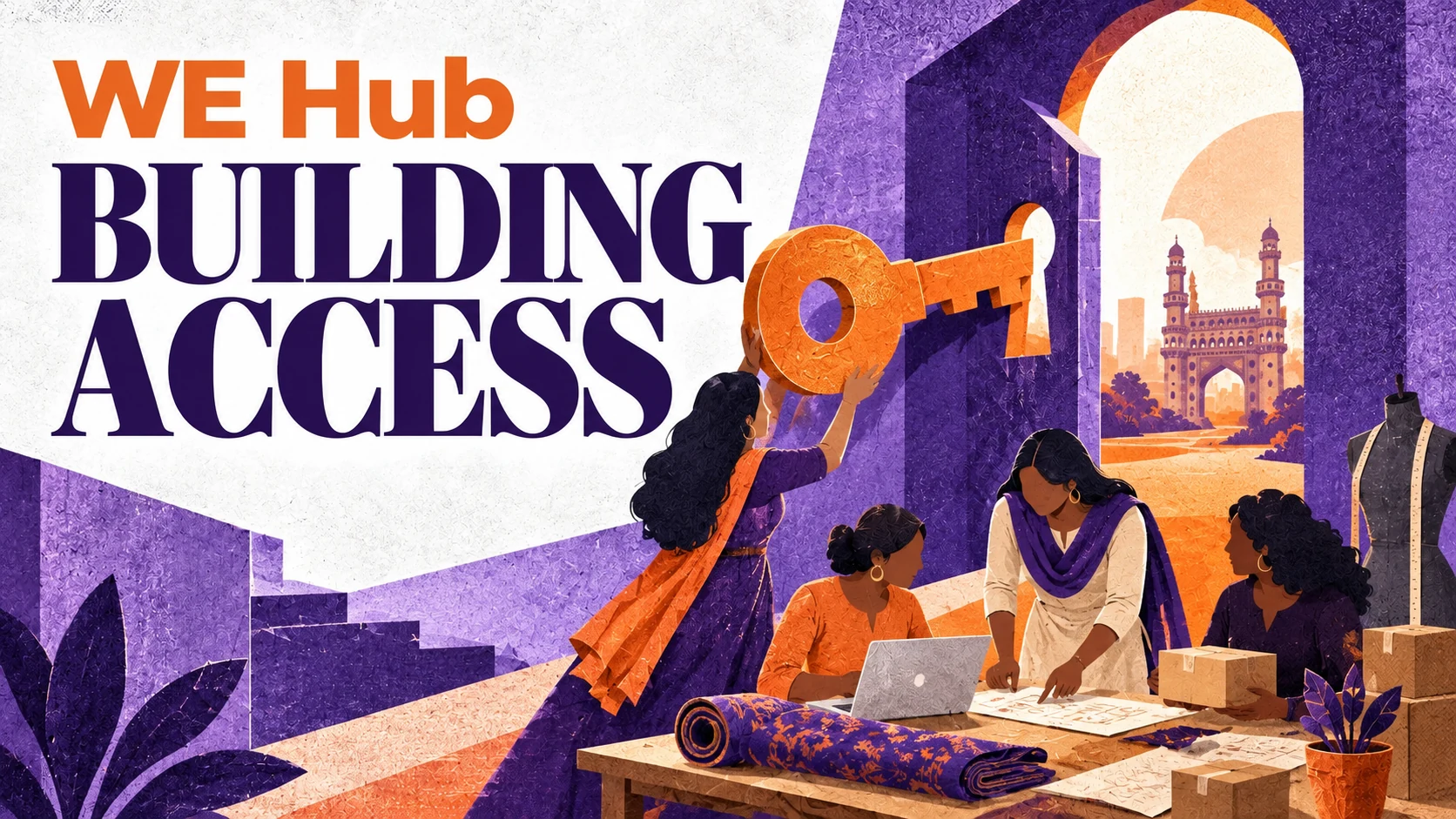
WE Hub is Telangana’s state-led organisation for women entrepreneurs. Its public offering includes business consultation, mentoring, marketing assistance, financial-support connections and community building. The organisation describes work with startups, smaller businesses and students, reflecting a range of entrepreneurial starting points.
Access has several dimensions
A founder may need a relevant introduction, confidence in a business process or help understanding how a market works. These are different needs and do not disappear simply because a programme is available. Thoughtful support makes the next step approachable and recognises the practical circumstances in which the entrepreneur is working.
Name the barrier you want to remove
Our editorial suggestion is to make the support request concrete. A team seeking its first institutional customer needs a different conversation from someone still exploring whether to start. Explain what has been attempted and where progress stopped. That gives a mentor or programme a better basis for helping. WE Hub’s current offerings and conditions define the available routes; the larger ecosystem lesson is that inclusion becomes meaningful through usable access to capability and opportunity.
Name the barrier precisely
A founder seeking support may need a market connection, help organising the business or a more relevant peer network. These are different requests. Describe what the team is trying to achieve and what currently prevents it. That makes it easier to investigate which programme, mentor or relationship is useful. It also avoids reducing very different businesses to a single demographic description. Ask about the participation format and the time it requires, since access depends on practical arrangements as well as eligibility. A meaningful ecosystem story records what changed because the support was available: a clearer process, a relevant introduction or evidence that helped the founder choose a next step.
Name the access barrier precisely
A founder seeking support may need a buyer introduction, business consultation, confidence in a pricing process or a connection to a specialist. These needs should be described individually rather than collapsed into a general request for empowerment. Explain the current business activity and the step that is difficult to complete. A support organisation can respond more usefully when the barrier is concrete. Check the current programme’s intended participants and process, then assess whether the available assistance changes the founder’s ability to act.
A practical next-step checklist
Use these questions to investigate the idea in your own context.
- Describe one business task that is currently blocked and why it matters.
- Bring evidence such as customer questions, a product demonstration or a process that needs review.
- Agree on a next action and assess whether the support helped complete it.
A closer look
How should a founder evaluate a women-focused entrepreneurship programme?
Look at the specific support, access arrangements and relevance to the business. The programme’s purpose matters, but its practical value depends on how it addresses the founder’s actual obstacle and working circumstances.
Sources & editorial note
This guide draws on the sources below. Our practical questions and analysis are editorial interpretation. Historical documents describe their own period; use current official programme information for availability, terms and applications.
See our editorial standards or request a correction. For a useful comparison, read Sairee Chahal: the SHEROES founder story. Explore the founder topic guides for connected reading paths.