The story in brief
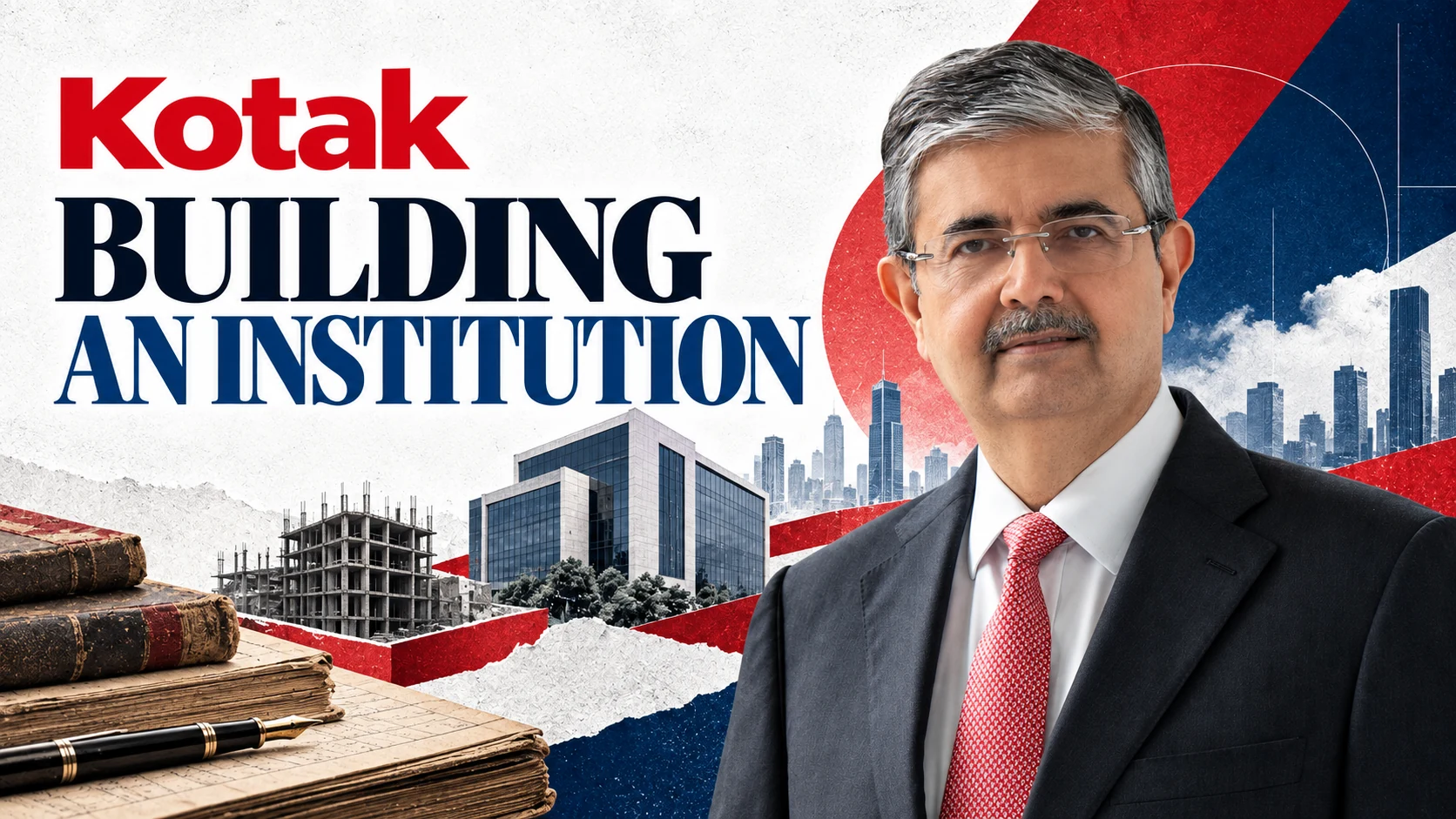
Uday Kotak’s founder story turns attention towards institution building. As activities expand, clear responsibilities and decision processes matter beyond the judgement of the founding individual.
A financial institution is built through repeated decisions about customers, people and risk. Uday Kotak’s founder story spans the development of the Kotak Mahindra group across several financial-services businesses. The group’s public biographies place banking alongside areas including asset management, investment banking and insurance.
Growth creates an organisational question
As the range of activities expands, the company needs ways to preserve clear responsibilities and sound judgement. A new business line brings a different customer relationship and different operating demands. A shared name is not, by itself, a shared method for making good decisions.
A founder’s role can change
The bank’s governance biography records that Kotak served as managing director and chief executive until September 2023 before moving to a non-executive board role. That transition is a useful part of the story: institution building includes preparing an organisation to work beyond the founder’s original operating position.
The founder lens
Our interpretation is to think about continuity early. What knowledge is documented? Who can challenge a decision? How does responsibility move when the team changes? These are company-building questions at a small scale as well as a large one. This profile examines that organisational journey and does not assess the merits of any financial product or investment.
Build decisions that can outlast one person
A founder can shape a company’s standards, but an institution needs those standards to remain understandable when decisions are delegated. Ask how a new activity is evaluated, who can challenge an assumption and where responsibility sits when several teams are involved. A shared brand does not make different business lines operationally identical. The useful lens is therefore the system through which people exercise judgement, record reasons and respond when circumstances change. This is a broader company-building question rather than a claim that any particular institution eliminates risk. A founder narrative becomes more informative when it explains how responsibility develops as the organisation becomes more complex.
Put the idea to work
Use these questions to investigate the idea in your own context.
- Identify decisions that currently depend on the founder alone.
- Document who owns and who reviews a cross-team decision.
- Explain the difference between a shared principle and a local operating process.
A closer look
How does institution building differ from starting a company?
An institution needs responsibilities and decision processes that remain understandable as people and activities change. The Kotak profile uses a founder’s journey to examine how judgement becomes an organisational capability, extending beyond decisions made personally by the original founder.
Sources & editorial note
This profile draws on the public sources below. Company and founder accounts describe their own perspective. Our analysis, questions and takeaway are editorial interpretation. This is not an original interview or a sponsored feature.
- Kotak Mahindra Bank: Uday Kotak’s governance biography
- Kotak Investment Banking: group and founder biography
See our editorial standards or request a correction. For another perspective, read What an incubator brings to the table.