The story in brief
ONDC separates commerce roles across participating entities. Founders need to understand which part of the customer journey they serve and how responsibilities connect across the network.
Source starting point: ONDC: network model, participant relationships and policy structure ↗. Full sources and context appear below.
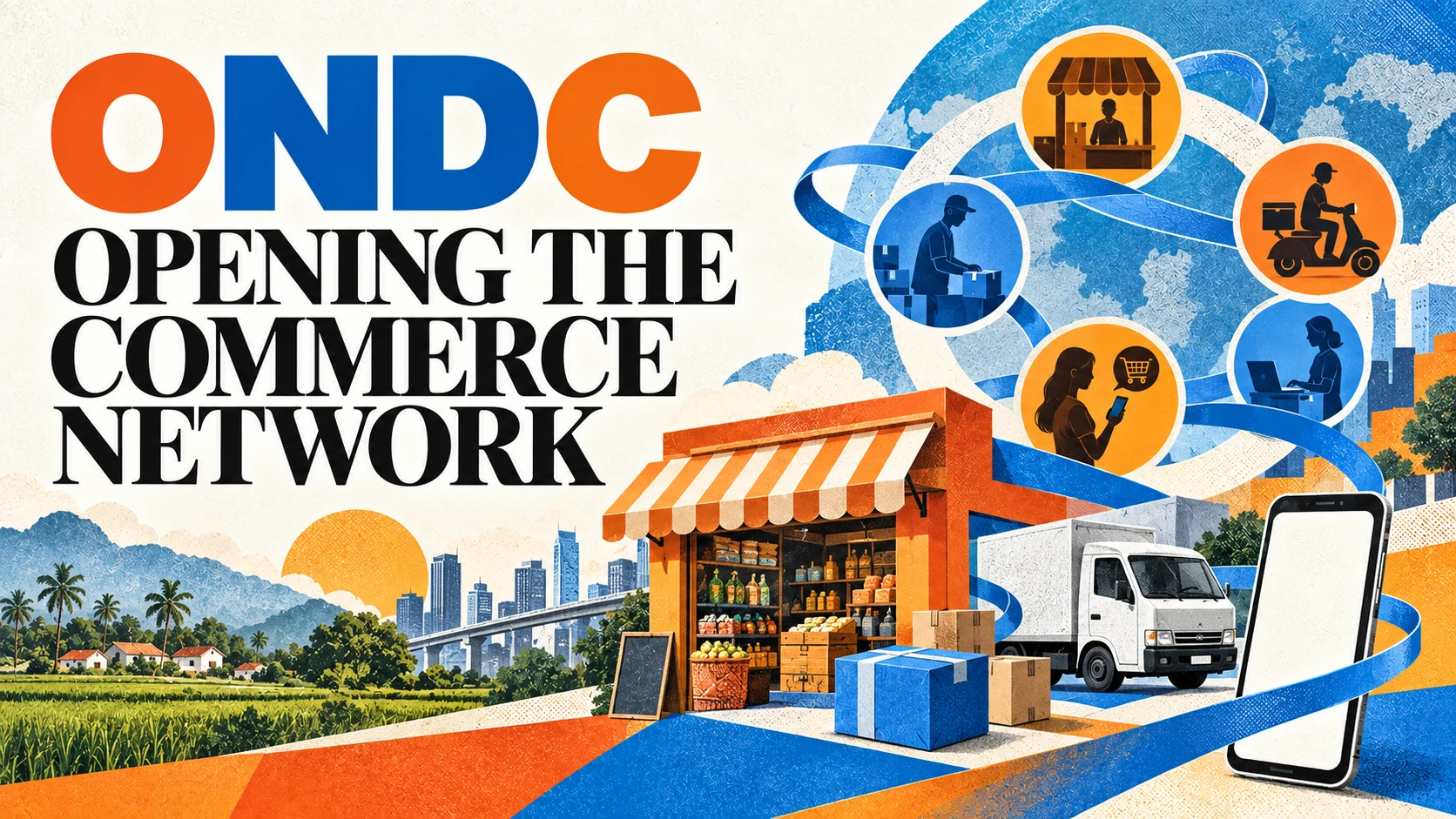
ONDC’s network-policy introduction describes a model in which different entities can perform different parts of a commerce transaction. Buyer applications, seller applications and other participants work within a common network framework. This differs from assuming that one marketplace operator controls the entire customer journey.
Understand the role before the opportunity
A venture exploring the network should first identify the function it intends to perform. Serving a buyer, helping a seller participate and supporting fulfilment involve different work. Interoperability can connect those functions, but it does not make their responsibilities identical or remove the need for commercial agreements.
Coordination is visible to the customer
Our editorial question is how the experience remains understandable when several organisations contribute to one order. Product information, order status and complaint handling need to connect coherently. A customer should not have to reconstruct the network to understand the next step. ONDC’s current policies define participant obligations; founders should read the provisions relevant to their actual role. The opportunity is in useful specialisation that still contributes to a dependable overall transaction.
Map one order across the participants
Open-network terminology becomes easier to understand when attached to a real task. Trace discovery, ordering, fulfilment and a possible complaint. At each stage, identify the participant with the relevant information and the participant responsible for acting. A founder evaluating a role in the network should investigate both the integration and the service process around it. Technical connectivity does not by itself explain how the customer gets an answer when something goes wrong. Use current network policies and participation information for the actual requirements. The business opportunity is a specific contribution to a coordinated service, rather than a promise that joining a network automatically creates demand.
Map responsibility across the order journey
An open commerce network can involve several organisations in one transaction. A founder should map who presents the catalogue, confirms availability, handles fulfilment and responds when an order goes wrong. A technically connected service can still produce a confusing customer experience if those responsibilities are unclear. Start with a small set of realistic transaction scenarios, including cancellation and a disputed item. Use current network documentation and agreements to establish the relevant roles; the broad network idea is not enough to determine the obligations of a particular participant.
A practical next-step checklist
Use these questions to investigate the idea in your own context.
- Draw the order journey and name the participant responsible at each step.
- Test unsuccessful and disputed transactions alongside the happy path.
- Confirm current participation requirements and the support handoffs before promising an experience to customers.
A closer look
Is ONDC a single shopping app?
No. The model described here allows different participants to perform different commerce roles within a common framework. The guide focuses on those relationships and directs practical integration and participation questions to current official documentation.
Sources & editorial note
This guide draws on the sources below. Our practical questions and analysis are editorial interpretation. Historical documents describe their own period; use current official programme information for availability, terms and applications.
See our editorial standards or request a correction. For a useful comparison, read Amod Malviya: the udaan founder story. Explore the founder topic guides for connected reading paths.