The story in brief
GeM provides a route into public procurement. A startup still needs to understand the buyer’s requirement, the relevant process and its own ability to deliver the proposed product or service.
Source starting point: PIB: GeM’s public-procurement role and startup access ↗. Full sources and context appear below.
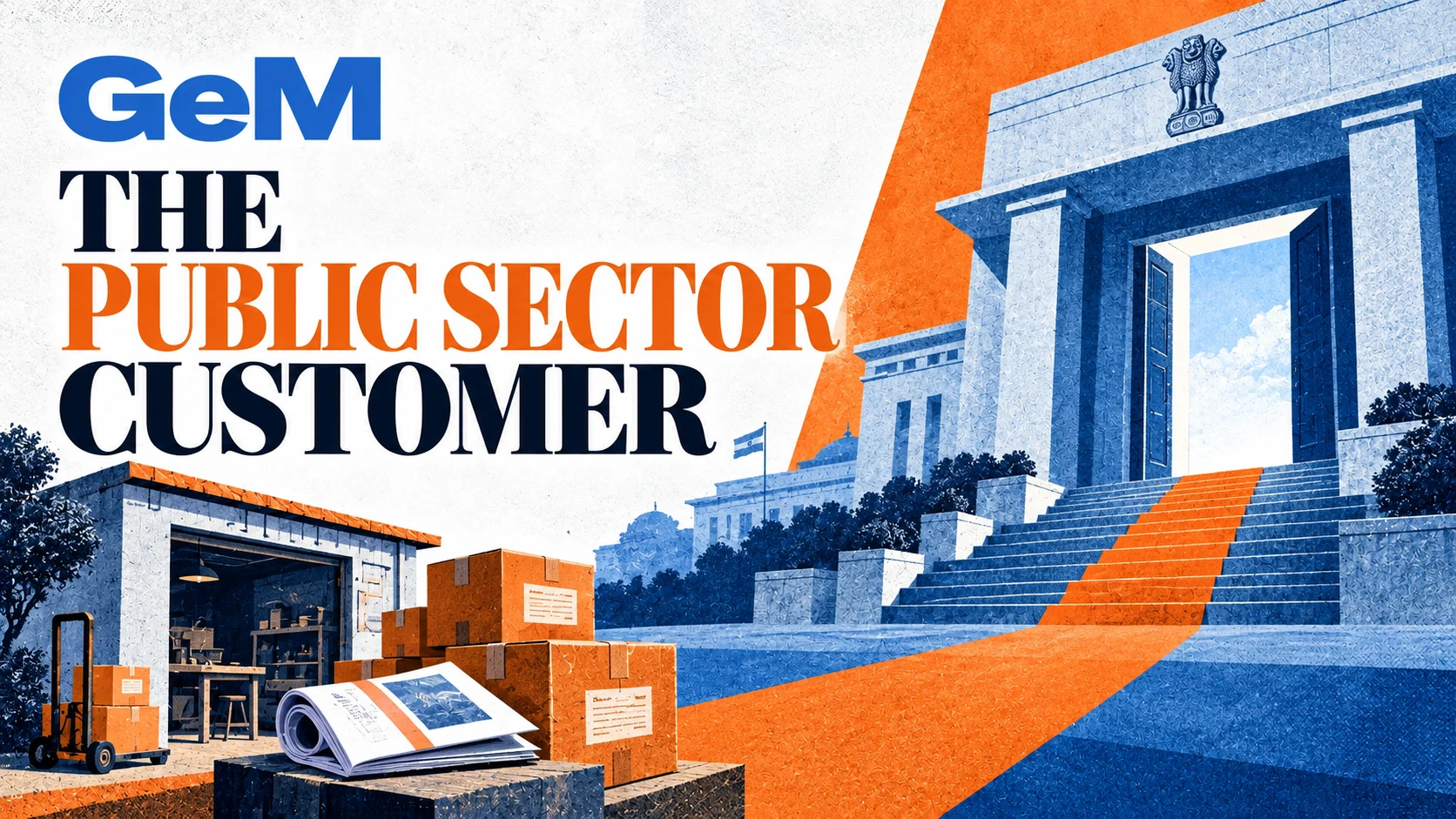
Government e-Marketplace, or GeM, is an online platform for public procurement in India. Its startup-facing initiatives include Startup Runway, while government descriptions also discuss training and market access for smaller enterprises. For a founder, the ecosystem opportunity is a more visible route to institutional demand.
A listing is not a customer relationship
An institutional buyer needs a product or service that fits a defined requirement. Specifications, delivery expectations, documentation and support can matter as much as the product demonstration. A startup should understand that buying process before assuming that platform registration will produce orders.
Prepare to deliver the promise
Our editorial suggestion is to begin with a clear account of the use case and the company’s capacity to fulfil it. A small, suitable opportunity may teach more than pursuing a large order the team cannot yet support. Check the current platform process and the conditions of a particular procurement directly. This article describes the market-access route and does not establish eligibility, guarantee preferential treatment or imply a government endorsement of any product.
Translate the product into the buyer’s working need
An institutional buyer may evaluate a product through specifications, delivery conditions and ongoing support rather than the language used in a startup pitch. Read the requirement closely and identify what evidence your team can provide. A product that works in a demonstration may still need documentation or operational capacity before it fits a purchase. Prepare those questions early, and use official procurement information for the actual process. Market access is valuable because it makes demand easier to discover; it does not remove the work of meeting that demand. A useful founder plan therefore includes fulfilment and support alongside the initial opportunity to be seen by a buyer.
Prepare for delivery before pursuing a buyer
A public-sector customer needs a product and a supplier that can meet the applicable purchase requirements. A founder should understand specifications, documentation, delivery commitments and the process for resolving problems. Registration or visibility on a platform is not the same as receiving an order. Review the current official seller and procurement material for the relevant category, and assess whether the team can fulfil the obligations of a realistic order. A smaller, well-understood opportunity can reveal more about readiness than a broad claim of access to government buyers.
A practical next-step checklist
Use these questions to investigate the idea in your own context.
- Identify the specific buyer problem and the product category involved.
- Check the current requirements and prepare evidence for the claims you make.
- Test delivery, documentation and support capacity against an actual order scenario.
A closer look
Does registering on a procurement platform guarantee orders?
No. Registration, eligibility for a particular opportunity and the buyer’s selection are separate steps. This guide explains how to prepare for the customer relationship, while current official procurement documents govern the specific opportunity.
Sources & editorial note
This guide draws on the sources below. Our practical questions and analysis are editorial interpretation. Historical documents describe their own period; use current official programme information for availability, terms and applications.
See our editorial standards or request a correction. For a useful comparison, read Pramod Bhasin: the Genpact founder story. Explore the founder topic guides for connected reading paths.