Who is Dinesh Agarwal?
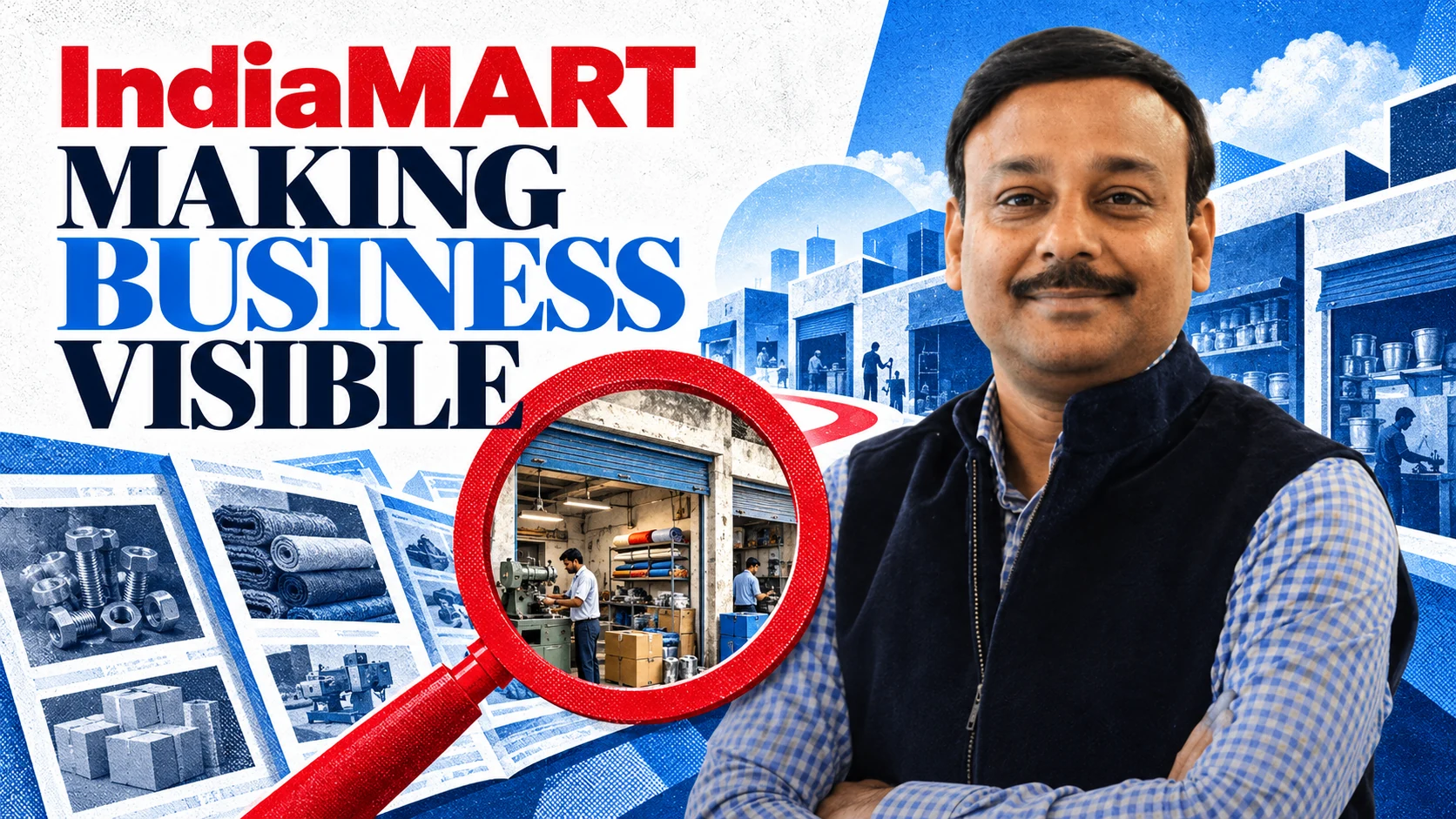
Dinesh Agarwal cofounded IndiaMART with Brijesh Agrawal. Its story concerns the visibility of smaller suppliers and the challenge of connecting them with buyers beyond existing trading relationships. The key distinction is between generating an enquiry and enabling a useful commercial conversation.
- Founder profiled
- Dinesh Agarwal
- Company or institution
- IndiaMART
- Reading lens
- B2B commerce
Source starting point: Dinesh Agarwal: career and IndiaMART origins ↗. Full sources and context appear below.
A capable supplier can remain invisible outside a familiar trading network. Dinesh Agarwal’s IndiaMART addressed that discovery problem through an online business marketplace. His earlier work included engineering and a stint with HCL in the United States; he returned to India in 1995 to pursue an internet venture.
Giving businesses a digital presence
The early idea connected exporters and buyers through online information. Agarwal worked with cofounder Brijesh Agrawal as the company developed. Its later emphasis on the Indian business-to-business market shows how a founder’s initial view of demand can change as the surrounding market changes.
Discovery is the beginning of a relationship
A business purchase often involves specifications, quantities, negotiation and delivery terms. A listing can open a conversation, but it cannot answer every commercial question. That makes the quality and freshness of supplier information important, alongside the ability to make meaningful contact.
The founder lens
Our interpretation is that visibility can be an economic service in its own right. The founder’s task is to understand what prevents a competent business from being found and what helps a buyer move from finding to evaluating. The two problems are connected, but solving the first does not automatically solve the second.
Turn an enquiry into a useful conversation
Business purchases often involve specifications, quantities and delivery requirements that cannot be captured by a product name alone. A discovery platform can reduce the effort of finding a supplier while leaving substantial work before an order is agreed. Founders can study this gap by comparing a vague enquiry with one that includes the buyer’s actual requirements. What information does the supplier need to respond meaningfully? What evidence helps the buyer evaluate the response? An enquiry count may measure activity without measuring quality. A more informative review follows the handover into the commercial conversation and records where either side has to start again.
The decision and its trade-offs
A supplier directory can reduce the effort needed to find a business without completing the buyer’s evaluation. Specifications, order quantities, delivery terms and response quality still matter. For a founder, the opportunity is to identify which part of discovery creates a recurring obstacle and then make the next commercial step easier to take.
How to investigate the operating model
Follow an enquiry rather than counting it as the final outcome. Was the requirement clear, did the relevant supplier receive it and did either side have enough information to continue? Repeated mismatches can indicate weak categorisation or incomplete listings. A useful marketplace review also asks what information suppliers must maintain and whether the effort produces conversations they consider worthwhile.
Evidence and context
A listing or introduction is not a verification of every supplier claim. The profile explains a marketplace problem; it does not assess a particular seller or guarantee the quality of an enquiry.
Put the idea to work
Use these questions to investigate the idea in your own context.
- Write an enquiry with specifications, quantity and intended use.
- Check whether a supplier profile explains actual capabilities.
- Ask which missing detail most often delays a useful response.
A closer look
Is discovery the same as completing a B2B transaction?
No. Discovery connects possible buyers and suppliers. Specifications, commercial terms, fulfilment and ongoing service may still need to be resolved. The article focuses on how a founder can make that initial connection more useful.
What should a founder investigate in the IndiaMART story?
Investigate response relevance, time to a meaningful reply and reasons an enquiry ends. More contacts can create more work without creating better matches.
Sources & editorial note
This profile draws on the public sources below. Company and founder accounts describe their own perspective. Our analysis, questions and takeaway are editorial interpretation. This is not an original interview or a sponsored feature.
See our editorial standards or request a correction. For a useful comparison, read Amod Malviya: the udaan founder story. Explore the founder topic guides for connected reading paths.